
Building Governance Capacity
Communities living alongside protected areas need the capacity to manage their land as a working enterprise. In Tanzania, we are the primary funders of Honeyguide, who now supports a network of community-owned Wildlife Management Areas (WMAs) spanning more than 1.2 million acres of land and benefiting over 500,000 people. Across all its landscapes, Honeyguide’s integrated approach combining enterprise development, governance, wildlife protection, and human–wildlife conflict prevention is turning nature protection into a viable community business model.
Honeyguide CEO, Sam Shaba recently spoke during the “What if…” session at the Business of Conservation Conference, held in in Nairobi earlier this month, reflecting on a fundamental question facing conservation today: what makes community-led conservation truly endure.
"While patrols and protection efforts remain essential for safeguarding wildlife and landscapes, long-term success depends on something deeper-strong governance.
"Governance is the bedrock where every dollar invested in conservation either compounds or disappears. When governance systems are effective, they create predictable institutions, transparent decision-making, and professional management. This predictability reduces risk for communities, partners, and investors, and it ensures that conservation initiatives are not only protecting ecosystems but also generating lasting value for the people who steward them.
"At Honeyguide Foundation, we have seen how governance can transform conservation outcomes. In Randilen Wildlife Management Area (WMA) in northern Tanzania, more than 93% of nearly 20,000 shareholders consider the WMA a success. When communities experience real returns from their shared natural assets, local ownership deepens. People defend the system because they see its value-economically, socially, and environmentally.
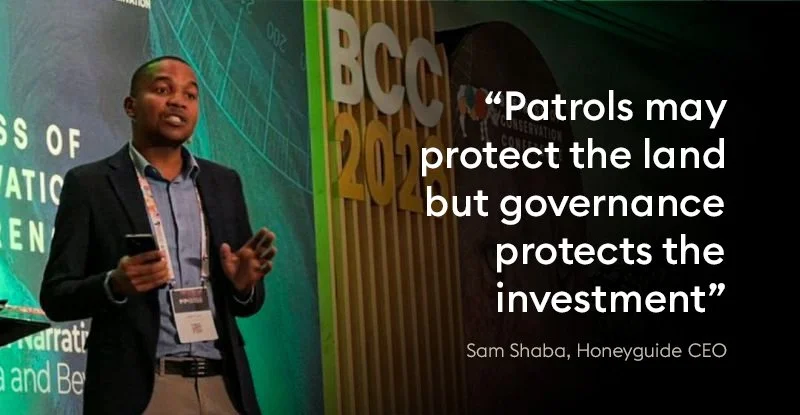
"This is what durability in conservation looks like. Strong governance strengthens political viability, builds stability, and ensures that conservation systems can endure over time. As the conservation sector continues to mobilize investment, the lesson is clear: protecting land is critical, but investing in governance is what protects the investment."
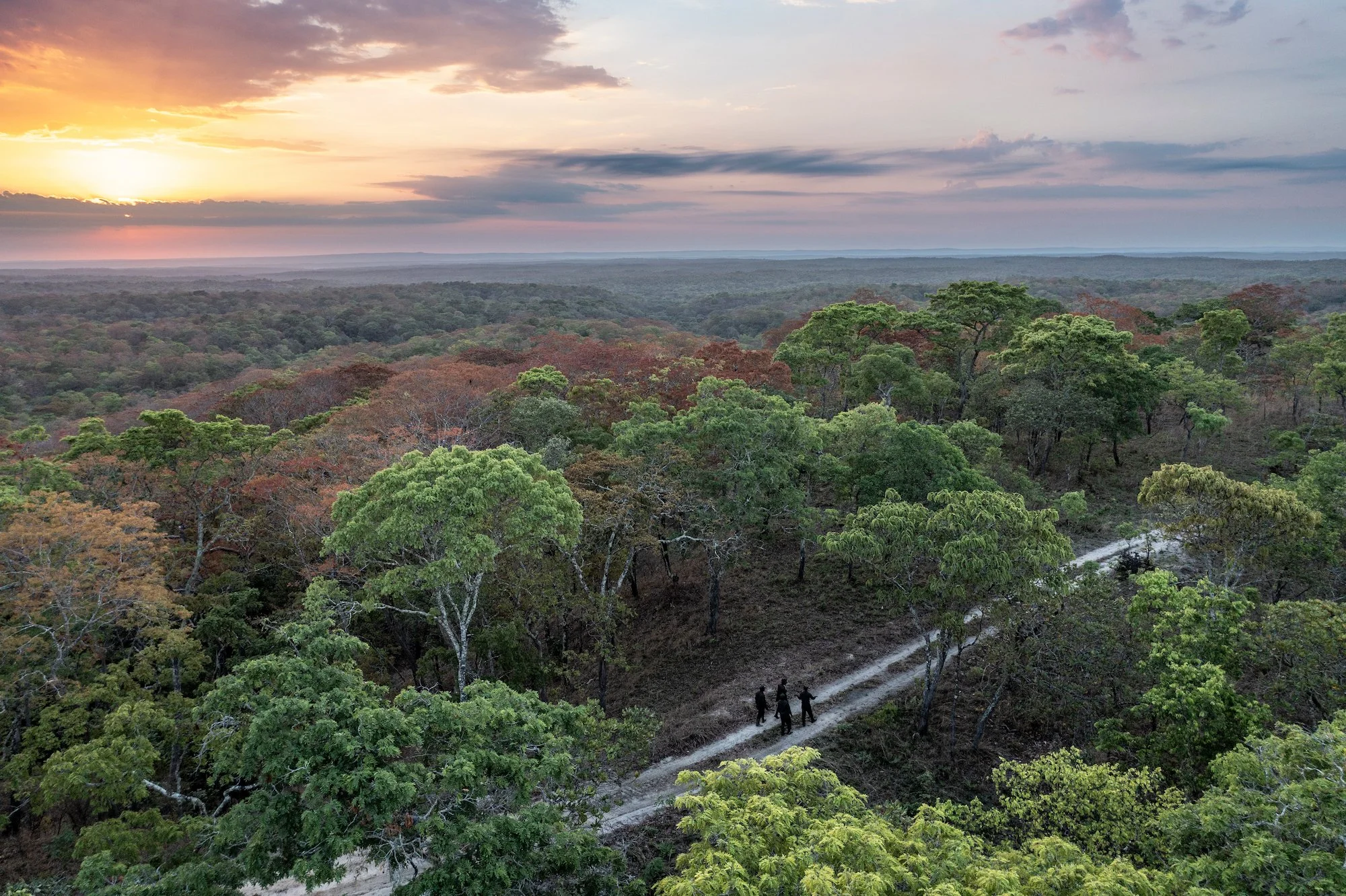
This year, we continue to work with Honeyguide in their work strengthening governance and management across Wildlife Management Areas (WMAs), including five in the Ruvuma region that span more than 15,000 square kilometres in southern Tanzania. Together, these WMAs are the corridors that form one of East Africa’s largest unbroken wilderness areas, connecting the Selous Ecosystem with Mozambique’s Niassa Reserve. Supporting these WMAs establish strong governance practices gives investors’ confidence that funds will be managed properly and is the foundation for the long-term sustainability of these protected areas.
Learn more about Honeyguide