
Menstrual Health Education in Tanzania
The founders of Mwandamo Women CIC didn’t realise that quite so much of their time would be spent talking about periods. It’s not that they didn’t expect the topic to come up; after all, Mwandamo means ‘lunar’ in Swahili, they’ve pioneered a free cycle tracking app, and much of their work specifically targets menstrual health. In Tanzania, there is a dearth of open conversation about the female body and how it works – and yet, even knowing this, and even after decades of working with Tanzanian women, the extent to which menstruation is shrouded in mystery still surprised them.
Mwandamo’s mission is to transform women’s health through education and compassionate care. Their Binti Imara – ‘strong daughters’ – programme teaches girls to understand their bodies as they navigate puberty and early adulthood. This begins seated in a circle, where everyone can make eye contact and there is no hierarchy. The safety of being contained in a closed ring signals that what is said stays inside, and in the intimate space this creates, questions and conversations begin to flow.
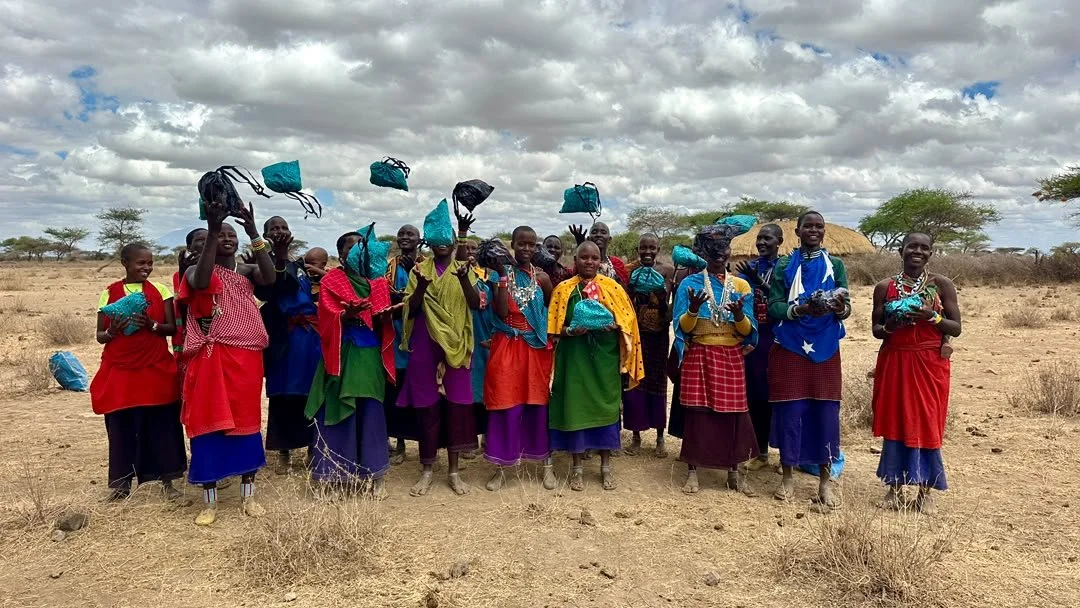
Maasai Girls with their menstrual reusable kits a benefit from Binti Imara Programme
Time and again, they’ve heard participants recount how they thought they were dying when they first had their period. Too ashamed and afraid to ask what was happening to them, the same fear returned after the second month, and the third. Superstition holds that if you tell someone you’re bleeding, one of your female elders will die. Taboo is strong: even when girls learn what their period is, they are taught that their blood is unclean and shameful.
This stigma permeates the education system too. Though the government’s educational guidelines on the subject are both comprehensive and progressive, the teaching isn’t trickling down to students. Girls lose days of school each month. The embarrassment of potentially bleeding through improvised pads fashioned from strips of cloth is enough to keep them home, but facilities compound the problem. Many schools have no separate toilets for girls, no water to wash with, and nowhere to change or dispose of used menstrual products. A study in Kilimanjaro's Siha district found that girls at schools without a changing room were nearly six times more likely to miss lessons during their period.
Teaching young women about the menstrual cycle isn’t just about demystifying the bleed; it’s helping them understand their own fertility. Until 2021, Tanzanian students who became pregnant were expelled from school. Although re-entry guidelines now allow young mothers to return, stigma and the demands of caring for a baby mean many never do.
Period poverty, then, is not simply lack of access to menstrual products: it’s the paucity of information available. It is the opportunity that evaporates when too many schooldays are missed. It’s the future that slips further out of reach when a girl falls pregnant and drops out.
Asilia, one of Nawiri’s travel brands, turns time in the wild into support for Mwandamo's Binti Imara programme. For every Asilia guest who takes a Serengeti Balloon Safaris flight over the Serengeti, Tarangire, or Ruaha, 10,000 Tanzanian shillings is donated toward a reusable menstrual kit that Mwandamo distributes. The partnership began in July 2026, and its first month alone generated enough funds for 58 kits. That makes 58 girls who receive the education and means to manage their period with dignity – and who have one less reason to miss out on school.
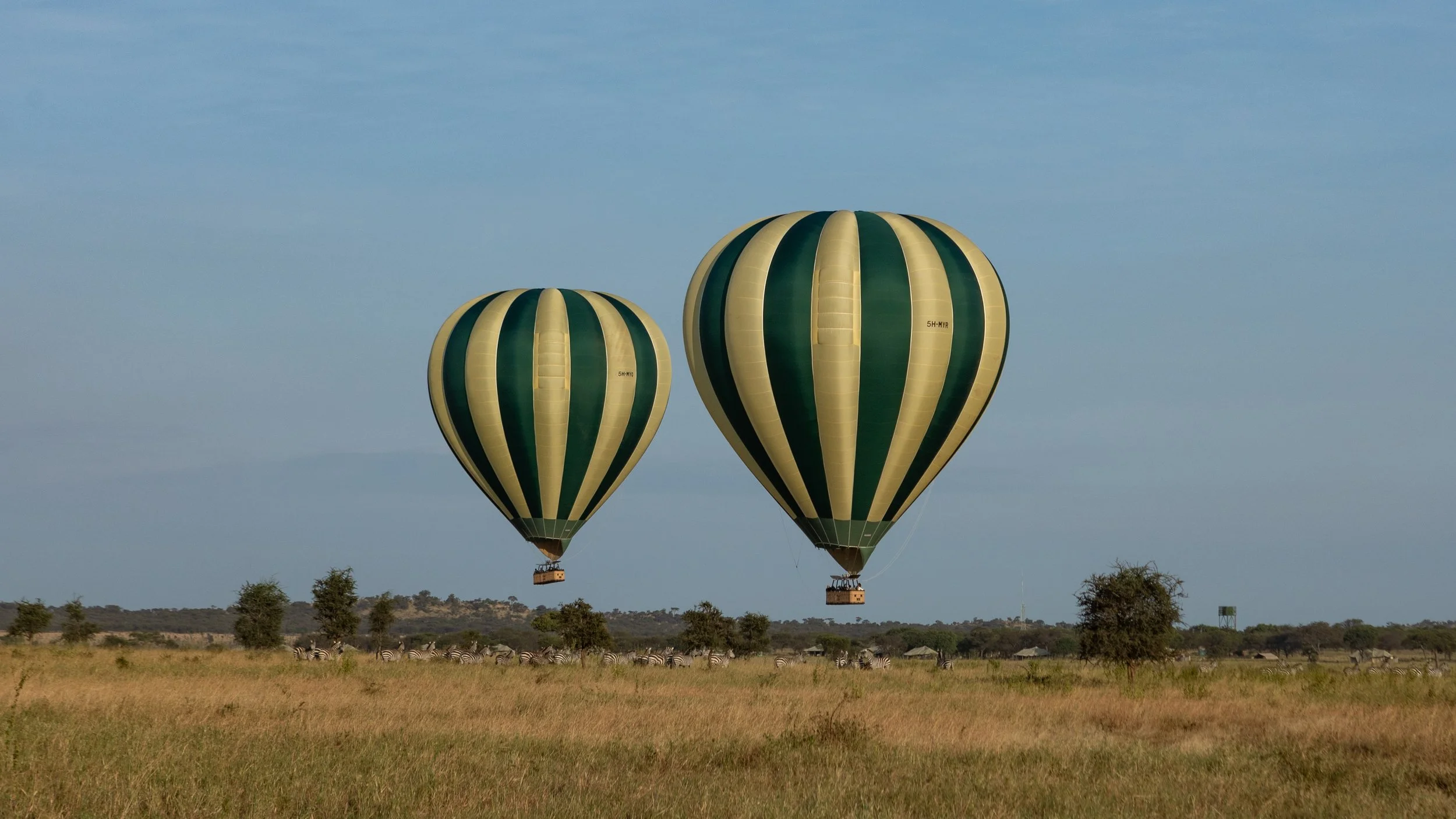
Guests taking Ballon Sunrise Safaris contributes to menstrual reusable kits that are donated to School girls.
Nawiri has been doing its own work to dismantle some of the barriers that prevent children from getting into the classroom. Our partner in this endeavour is Afya Plus, a Tanzanian organisation working to prevent disease through water, sanitation and hygiene (WASH), nutrition, and support for girls and young women.
Agreyson Nyenza, one of Afya Plus’s programme officers, led a baseline assessment across schools in Mbarali, southern Tanzania. Though the objective was to identify schools most in need, the location matters too. Mbarali sits on the Usangu plains, whose wetlands are the source of the Great Ruaha – the river for which Ruaha National Park is named. Farmers, herders, community water users, and park staff are bound together by this natural resource they must manage and share.
We’ve seen how education broadens the range of opportunities available to young people; when there are more ways to earn a living beyond farming and herding, families aren’t dependent on land and water alone. Educated young adults are also better placed to participate in decision-making around stewardship of their natural heritage – so the brighter the future looks for these future stewards, the greater the chance of a thriving future for nature too.
Agreyson and his team were looking at the condition of toilets, handwashing facilities and changing rooms, as well as hygiene practices and water storage. The assessment revealed that students were defecating in bushes, and stomach problems and poor health were frequent occurrences. Among the schools they assessed was Mapogoro B Primary. Having no water on site, children were making a two-kilometre round trip twice a day to fill buckets for drinking, cooking, and cleaning.
That began to change in 2025. With support from Nawiri, Afya Plus installed a water tower with storage tanks at the school; in 2026 handwashing stations and toilet renovations followed. A follow-up just four months later found no further reports of stomach complaints. Galus Chitanda, the head teacher, watched attendance climb from 70% in 2025 to 98% in 2026.
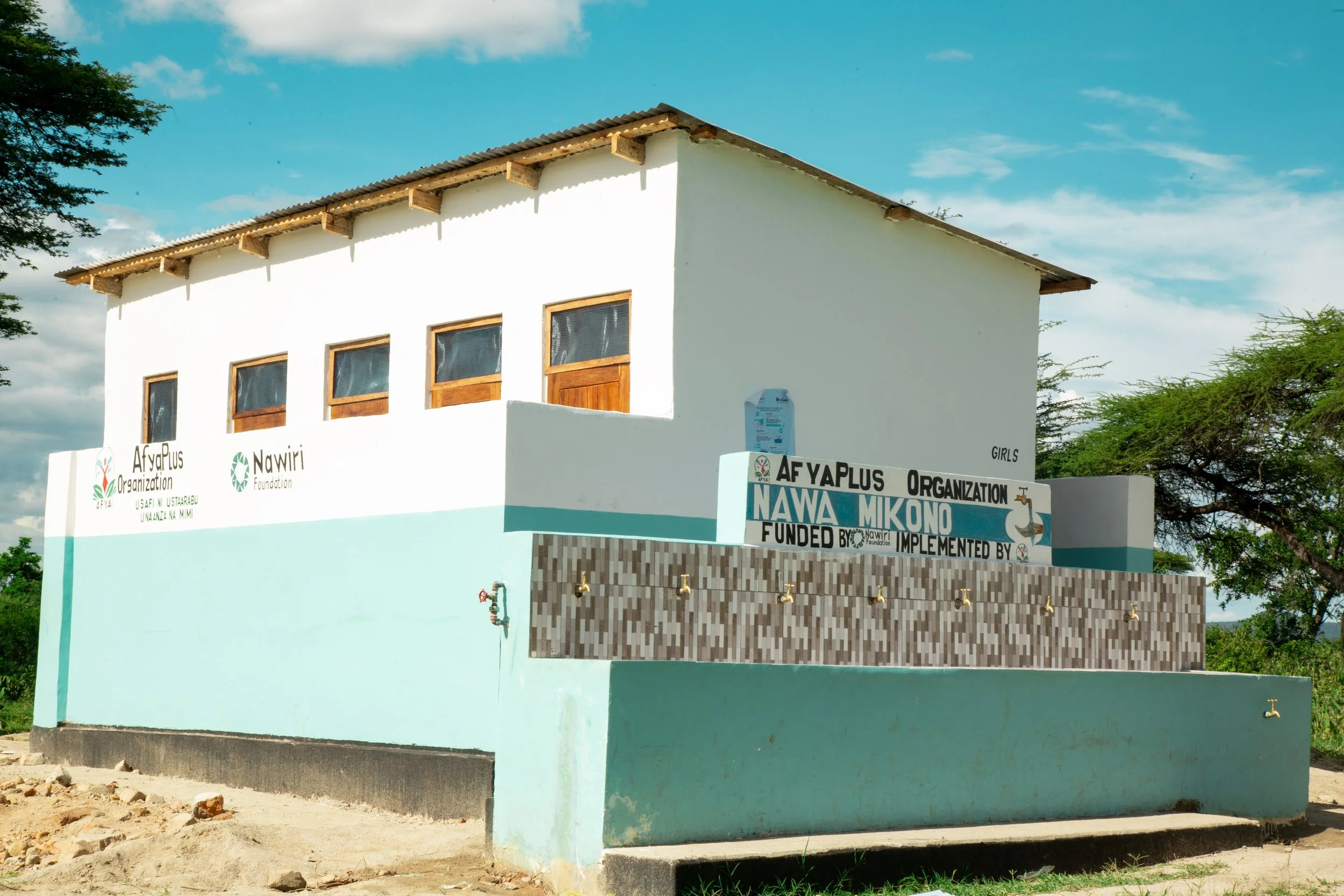
A renovated toilet and handwashing station for students at Mapogoro B primary school
Infrastructure is only part of the story though: Afya Plus’s community-based trainer’s team up with teachers to run regular hygiene sessions with students. Akhlane Saidi Kunge, a farmer who has four children at the school, says even his youngest now washes her hands before and after meals, and after using the toilet. Following her example, the family installed a kibuyu chirizi: a hanging water gourd that they all use for handwashing.
Halima Omary Salumu is a food vendor and mother of seven – two of her daughters, aged ten and six, are at Mapogoro B. Halima recalls her neighbour’s children staying home for up to five days a month because of their periods. Akhlane’s eldest girls, who are now at secondary school, used to miss class for the same reason. Now, in less than a generation, that has changed.
Mlungu and Msangaji Mpya received water towers and tanks in 2025. At Magigiwe Primary, a full water, sanitation and hygiene system was completed that same year. Here, a private changing room for girls includes running water and an incinerator for sanitary waste. Afya Plus have undertaken other projects aimed at dismantling stigma around menstruation and providing menstrual products – and their focus on women’s health and wellbeing is part of why girls’ safety and dignity are baked in by design.
Children whose older sisters missed class every month are growing up with running water, clean toilets, and hygiene lessons. A girl who stays in school is better placed to sit exams, to decide whether and when to start a family, and to shape the future of the place she calls home. On the Usangu plains, where farms, families and wildlife coexist, people’s futures and nature’s are inextricably intertwined. Keeping children in the classroom is one of the most practical ways we can help bring about thriving, for people and nature too.