
Marine Education for 109 Children
Marine Megafauna Foundation, one of our newest impact partners, has launched its marine education and swim-safety programme to a fishing community north of Vilanculos, Mozambique, with funding from Go2Africa.
In August, 109 children from 19 de Outubro School arrived for their first Ocean Guardians lessons. With lessons delivered from the classroom, beach, and the swimming pool. For every child, it was their first time in a pool.
“Despite not knowing how to swim the children love water,” says Azevedo Jaime, Education Project Manager at Marine Megafauna Foundation. “For all of them, it was the first time in a swimming pool.”
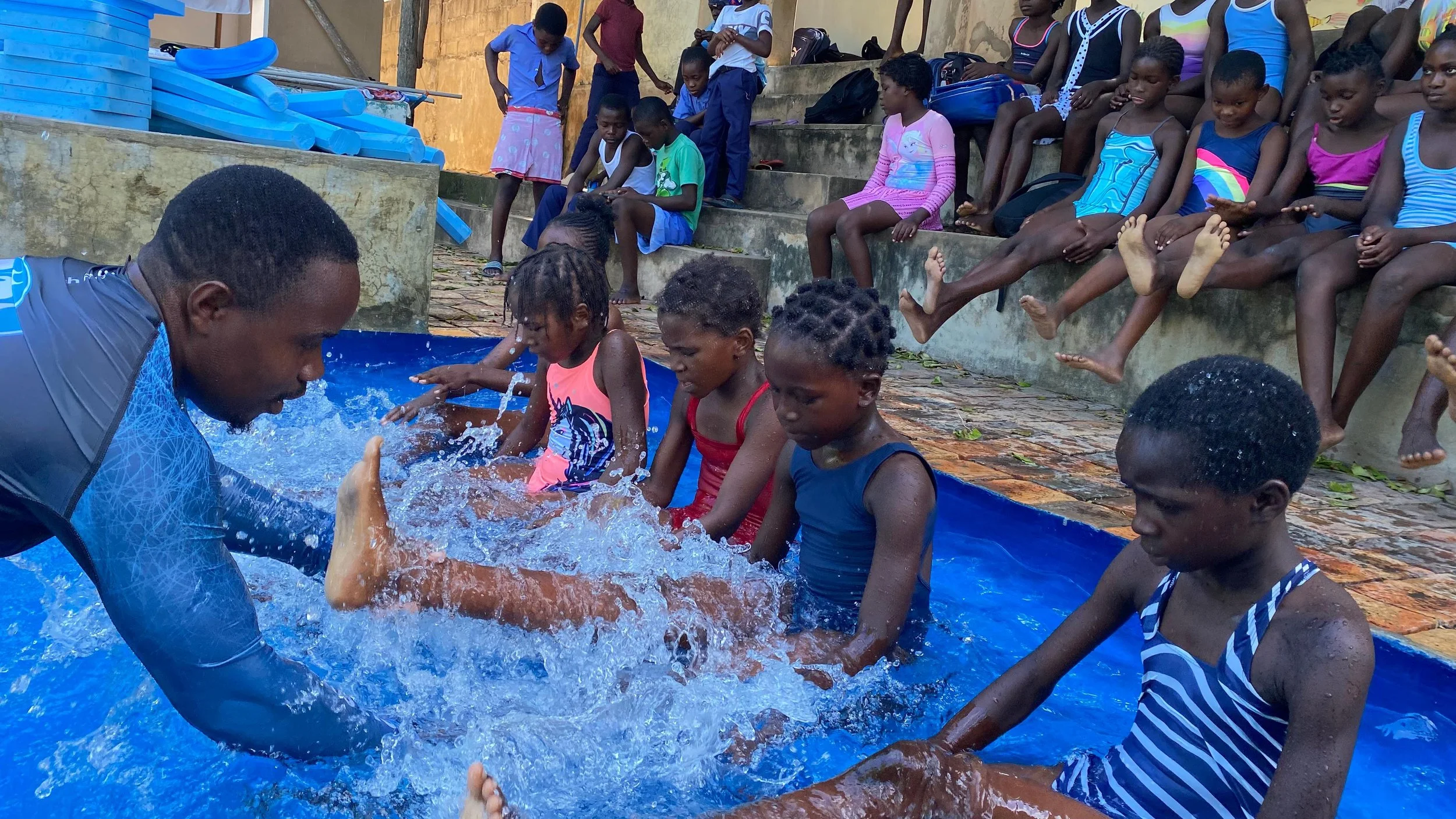
Children learning to swim for the first time
From the mainland at Vilanculos, the Bazaruto Archipelago lies across a reach of the Indian Ocean shaped by reefs, channels and inshore fishing grounds. Manta rays, whale sharks and turtles live within these waters and Bazaruto also holds Africa’s last viable population of dugong. Along the mainland shore, fishing boats leave from beaches that are at once a place of work, food and family life.
Around 19 de Outubro School, nine in ten families depend on fishing. Children grow up near the sea and many begin helping with family fishing while still at school. Being familiar with the shore though, is different from understanding water safety. Many children have had no formal swimming lessons and do not know how to float, swim to safety or read changing conditions.
“Last year, I was told 12 children had drowned here on Vilanculos beaches,” Azevedo says. “This number is huge for us.”
Marine Megafauna Foundation, known as MMF, has worked in Mozambique for over 15 years. Founded by marine scientists Dr Andrea Marshall and Dr Simon Pierce, the organisation studies threatened species and the habitats on which they depend. Its field research in Inhambane Province has helped build a clearer picture of manta rays, whale sharks, sharks, rays and turtles along this coast.
Ocean Guardians is their UNESCO-recognised educational programme that takes marine science into public schools through a curriculum approved by the Mozambican government. Since 2012, it has worked with thousands of children across Inhambane Province. The funding from Go2Africa has helped MMF expand the programme to include this fishing community where lives are so entwined with the water.
The programme teaches from both sides of the waterline. In the pool, lessons begin with breathing, blowing bubbles and learning to float. Children then progress through basic strokes and practise how to respond safely in water. Later, once they have built confidence, a supervised beach session helps them apply those skills in the sea. In the classroom, pupils work through 21 subjects covering food chains, reef health, overfishing, pollution and the lives of turtles, manta rays and whale sharks. The examples used are close to home. A juvenile fish taken before it can reproduce means fewer fish in the future. A dropped plastic bag can reach the sea, where a turtle may mistake it for food. Saturday activities take the learning outside. Children take part in beach clean-ups, arts and crafts, and practical sessions in their communities. The children taking part come from fishing families, which places them close to many of the decisions the programme hopes to influence. A lesson about the growth cycle of a fish can become a conversation at home about the size of a catch. Learning how reefs support fisheries can change the way a child understands the source of the family’s food and income.
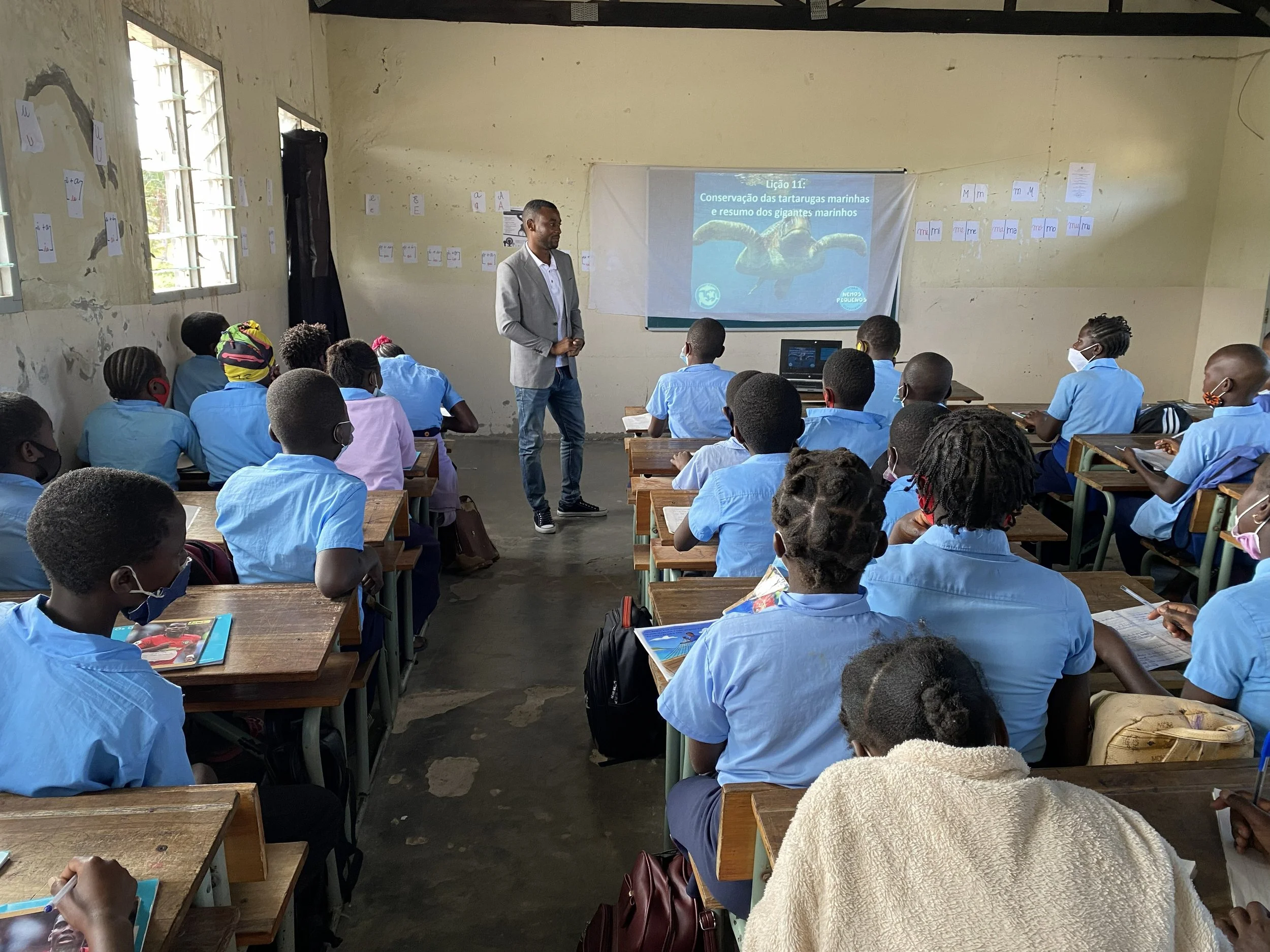
Children learning about Marine Conservation
The programme is being built with local leadership in mind. An experienced MMF instructor is working alongside a locally recruited assistant educator in Vilanculos. As the assistant gains experience, teaching responsibility will be transferred locally. This creates skilled employment and leaves the programme in the hands of someone who knows the schools, families and shore.
Go2Africa’s funding supports the school curriculum, swimming and water-safety teaching, equipment and the Saturday programme. It also allows MMF to establish the local teaching structure needed for the work to continue. The education supports long term opportunities and many of the children will grow up and work within the fishing community with a stronger understanding of breeding cycles and reef health. Others may find their way into marine science. More immediately, along a coast where the sea is part of daily life, the water safety techniques and swimming safety can save lives.