
Partner Spotlight - Kuru Dogs
Across Tanzania’s great wilderness areas, a new kind of ranger is at work. They don’t wear a uniform but move across the land quickly on four legs. These are the conservation dogs of Kuru Dogs, one of our impact partners.
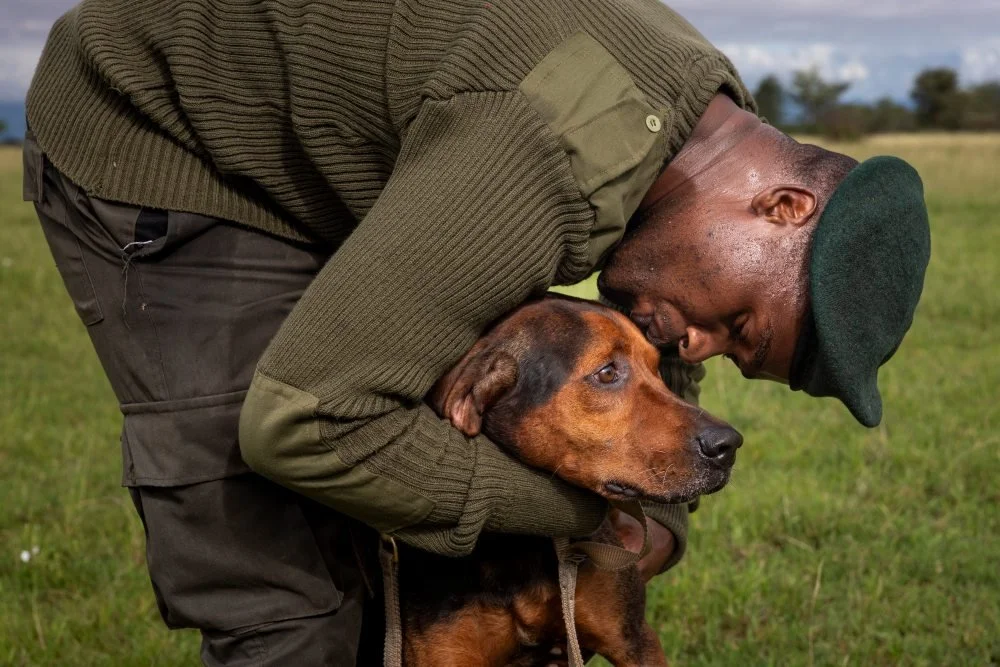
Kuru’s work combines strong science with community roots, collaborating with government wildlife authorities and NGOs to provide dogs, training, and ongoing support. Our funding supports the training, care, and deployment of conservation tracking dogs, whose role is to patrol and protect vast areas effectively, deterring poachers, detecting wildlife products at borders, and uncovering wire snares from the bush.
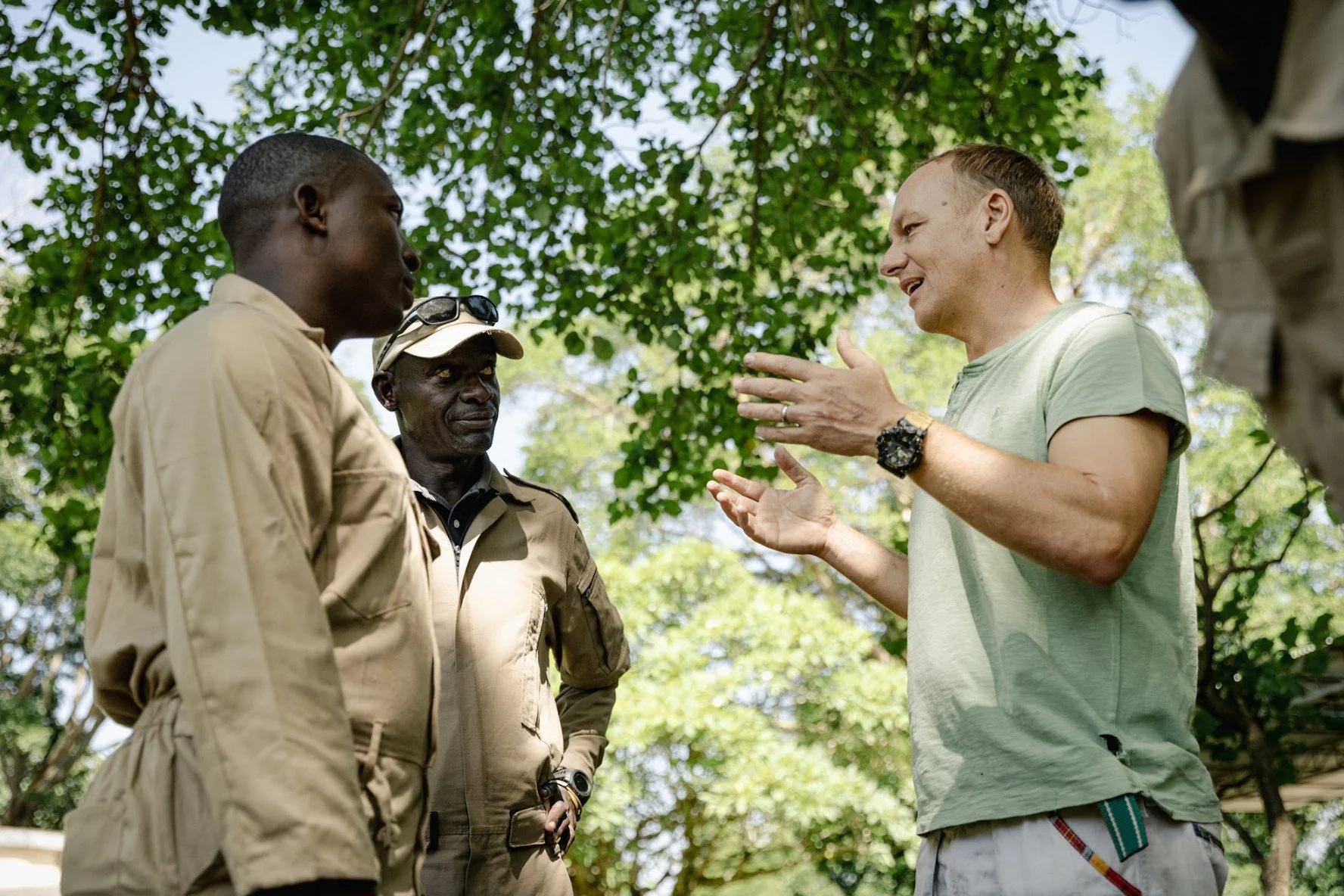
Kuru Dogs was founded by trainer Will Powell (pictured below, right), who has spent more than twenty-five years working with detection dogs. Before coming to Africa, he trained dogs to find landmines in post-conflict zones, with his dog-training skills seeing him deployed to train land-mine detection dogs and handlers in places such as Rwanda, the Balkans, Cuba, Honduras, Nicaragua, Afghanistan, Azerbaijan and South Sudan. In 2014, Will transitioned to conservation work, designing, developing and managing successful conservation dog programs in six countries across Africa before setting up Kuru Dogs in Tanzania.
Working with communities to create a deterrent
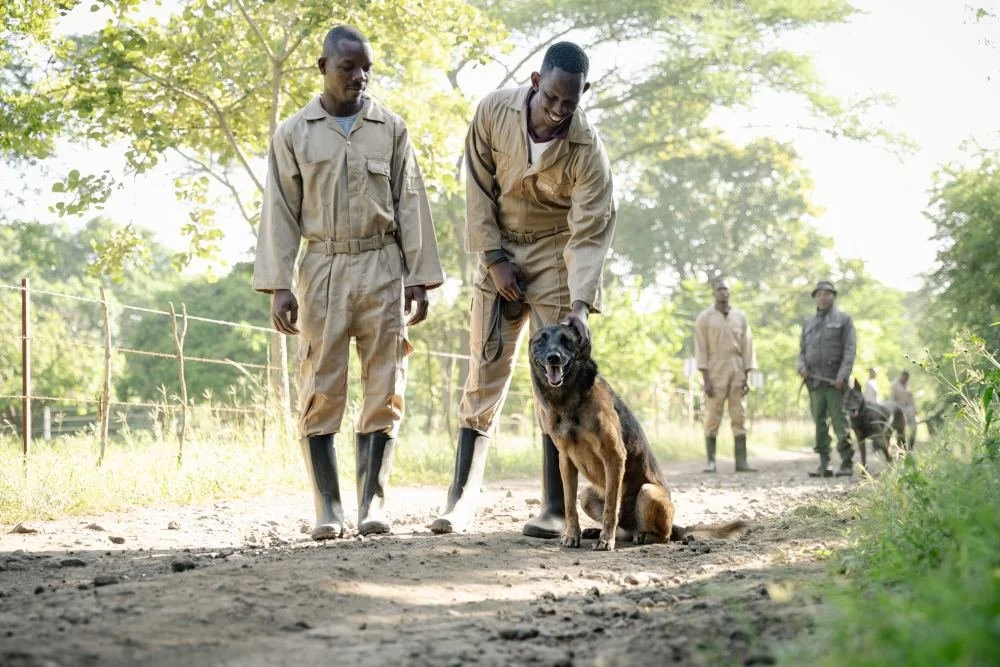
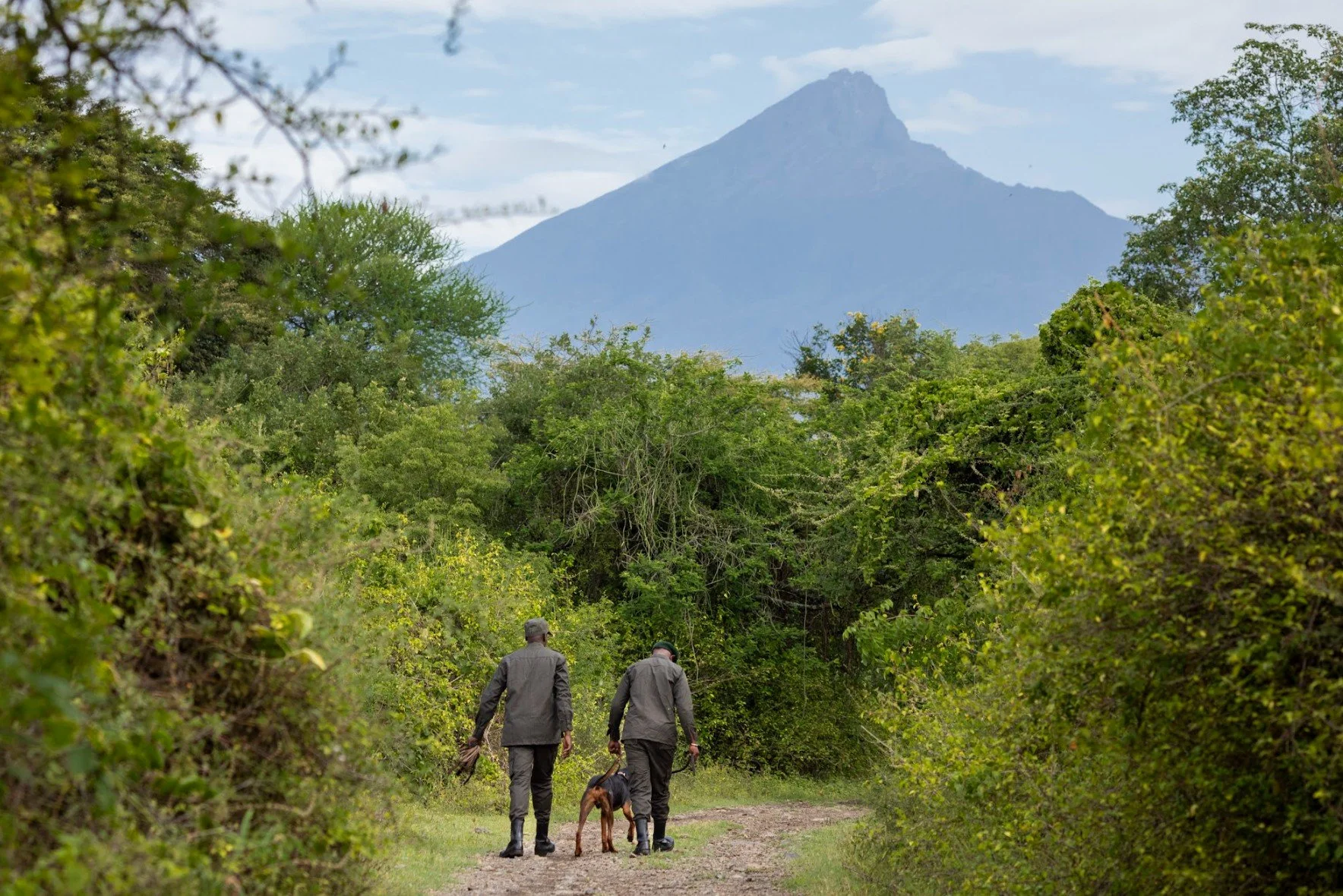
Trained dog teams patrol thousands of square kilometres. The dogs can follow a human scent trail that is several days old passing through villages and grassland, dust and heat, sometimes covering twenty kilometres in a single track. The effectiveness reaches far beyond an arrest; the dog patrols act as a powerful deterrent. Community engagement and demonstrations of the dogs ability is key in this respect. When villagers see a dog follow a scent from a poaching site to a suspect’s door, the message spreads quickly. People understand that these animals can and will find those responsible. There is nowhere to hide.
To show the effectiveness of the dogs, Kuru offers their services to the communities. “We can help them if there has been a theft, or even with serious crimes such as murder and rape” Powell recounts. “Search and rescue is perhaps the most rewarding. Powell remembers one search that showed just how valuable the dogs can be. A five-year-old boy had gone missing in the Randilen Wildlife Management Area. Finn, one of the dogs, picked up the track and followed it for about four kilometres to a korongo, a steep gully where the child had fallen and could not climb out. He was found alive, tired and dehydrated as evening was closing in and hyenas were already patrolling nearby. “He would almost certainly have been killed that night,” Powell says. “It was fantastic to be able to help, and it changed how the community saw us. They could see for themselves that these dogs really can find people.”
Sniffing out snares
Kuru’s dogs also search for wire snares. A tracking dog follows the line of scent left by a person as they move across the land. When a poacher walks through the bush carrying coils of wire, each strand picks up his scent. As he stops to bend down and set a snare, the smell becomes even stronger, pooling around the spot. For the dogs this is unmistakable and a single dog can locate dozens of snares in a morning. For poachers, making snares takes time and effort. The wire is often stripped from electricity poles or extracted from inside old tyres and twisted by hand into cables. Each snare is valuable, and losing them is a setback. When Kuru’s dogs and handlers find and remove snares every day, the losses mount and the economics of poaching begin to fail. It becomes costly and exhausting to keep replacing them. Over time, many poachers simply give up and look for another way to earn money. Each patrol deters those tempted by quick gain.
Fighting trafficking
The same skills used in the field are also being used to stop wildlife trafficking. Kuru trains detection dogs to search vehicles, luggage, and shipping containers for ivory, pangolin scales, lion claws, and other illegal products. The dogs work quickly and accurately, cutting inspection time from hours to minutes. Their visibility also acts as a warning. Smugglers think twice when they see a handler walking the line with a dog at heel. Governments have welcomed the approach. The dogs are a visible sign of investment in protection and a working deterrent that costs less than expanding conventional patrols.
Choosing the right dog
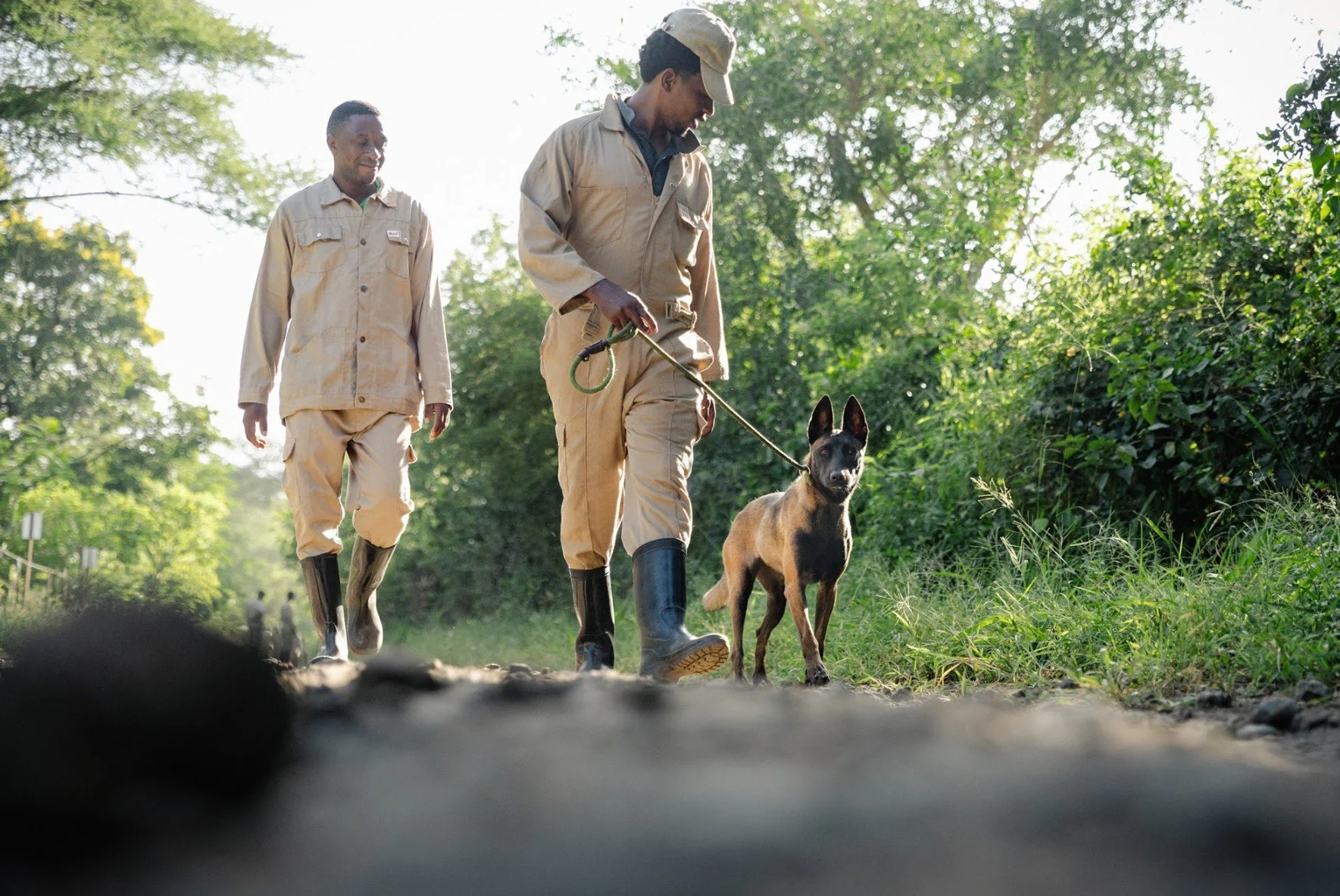
Success begins with selection. Kuru trains Belgian Malinois, German Shepherds, and Bloodhounds for different roles. Malinois are athletic and thrive in heat. Shepherds balance endurance and obedience. Bloodhounds bring unmatched scenting ability for long tracks.
Powell looks first for temperament. “We choose dogs that love the game,” he says. The game might be a toy or a scent trail, but the desire must be natural. Once the right dog is chosen, it trains at Kuru’s base in northern Tanzania. Handlers learn beside their dogs, building trust that becomes essential in the field.
Dogs begin with basic obedience before moving to complex tracking and detection. They learn to follow a single human scent, ignore distractions, and signal finds without aggression. When they graduate, they are ready for the demands of real patrols which involve long hours, shifting winds, and terrain that ranges from thick bush to open plains. Importantly though, they love what they do, tying into Kuru’s philosophy built around welfare. Veterinary care, hydration, and downtime are a crucial part of every dog’s schedule.
A partnership for protection Kuru’s work aligns closely with our own approach to long-term, community-led conservation. By training local handlers, collaborating with wildlife authorities, and ensuring every intervention is cost-effective, Kuru offers an effective way of protecting wilderness areas that starts with a single scent.