
The Science of Reforestation
On the western edge of Bwindi, the forest stops abruptly. You stand on a slope of regimented tea bushes and then, almost without warning, the canopy rises. Vines hang thick, the air cools and the distant noise coming from the villages switches to that of colobus monkeys moving high above you, unseen.
Bwindi Impenetrable Forest is a UNESCO World Heritage Site and home to roughly half of the world’s remaining mountain gorillas. It also supports hundreds of endemic plant and bird species. The boundary is hard. In many places, cultivation runs right up to the park line. Our long term objective here is to soften the forest edge and create a buffer zone, protecting and strengthening the forest edge to secure the long-term resilience of this critical ecosystem.
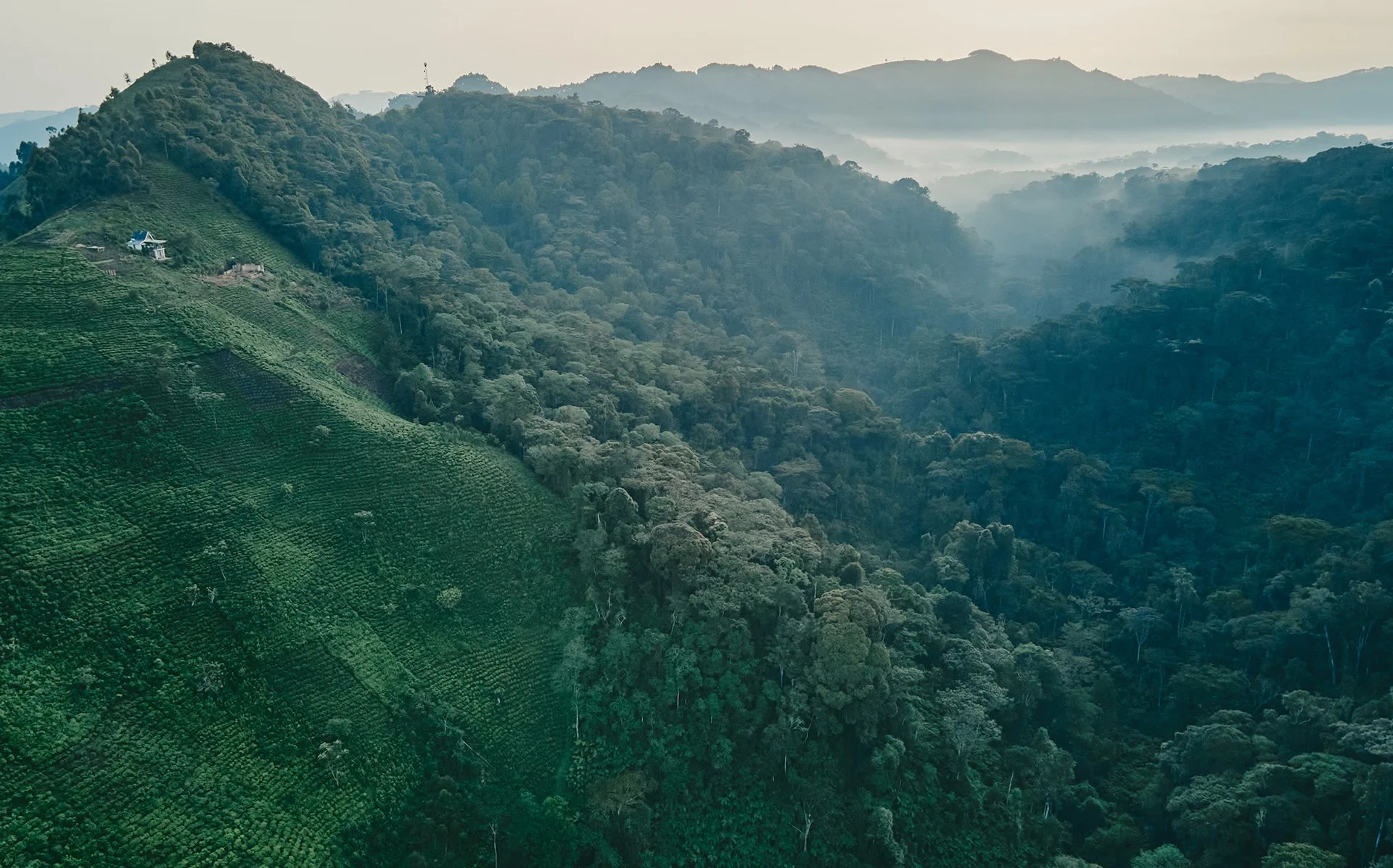
The current restoration site at Erebero Hills covers 61.8 acres. We are working on a defined area of degraded land, much of it former tea estate, where soils are compacted and chemically altered from decades of use. There is no established blueprint for restoring ex-tea plantations at scale in a tropical montane system. So the work we are doing currently is laying the foundations for the future, testing how degraded land can realistically be brought back into forest.
Instead of clearing everything and replanting intensively, which is hard to scale, we are trialling different approaches across different zones.
The first is assisted natural regeneration, whereby some tea rows are selectively removed and native species planted to accelerate succession. The research looks to understand which trees help drive regeneration. For example, planting fruiting trees to bring birds from the forest who bring seed with them accelerating regeneration.
In a slight variation of this approach existing tea is retained and used as weed suppressants, introducing native seedlings to establish beneath it.
The third approach is nucleated regeneration, building outward from individual trees that have already established themselves within fields, creating small pockets of regeneration from existing mature trees and the micro-ecosystems around them, then linking these "islands" of recovery over time.
The current aim is to practically establish which methods offer the best survival rates for seedling, which are most scalable, and which are cost-effective enough to replicate beyond a single site.
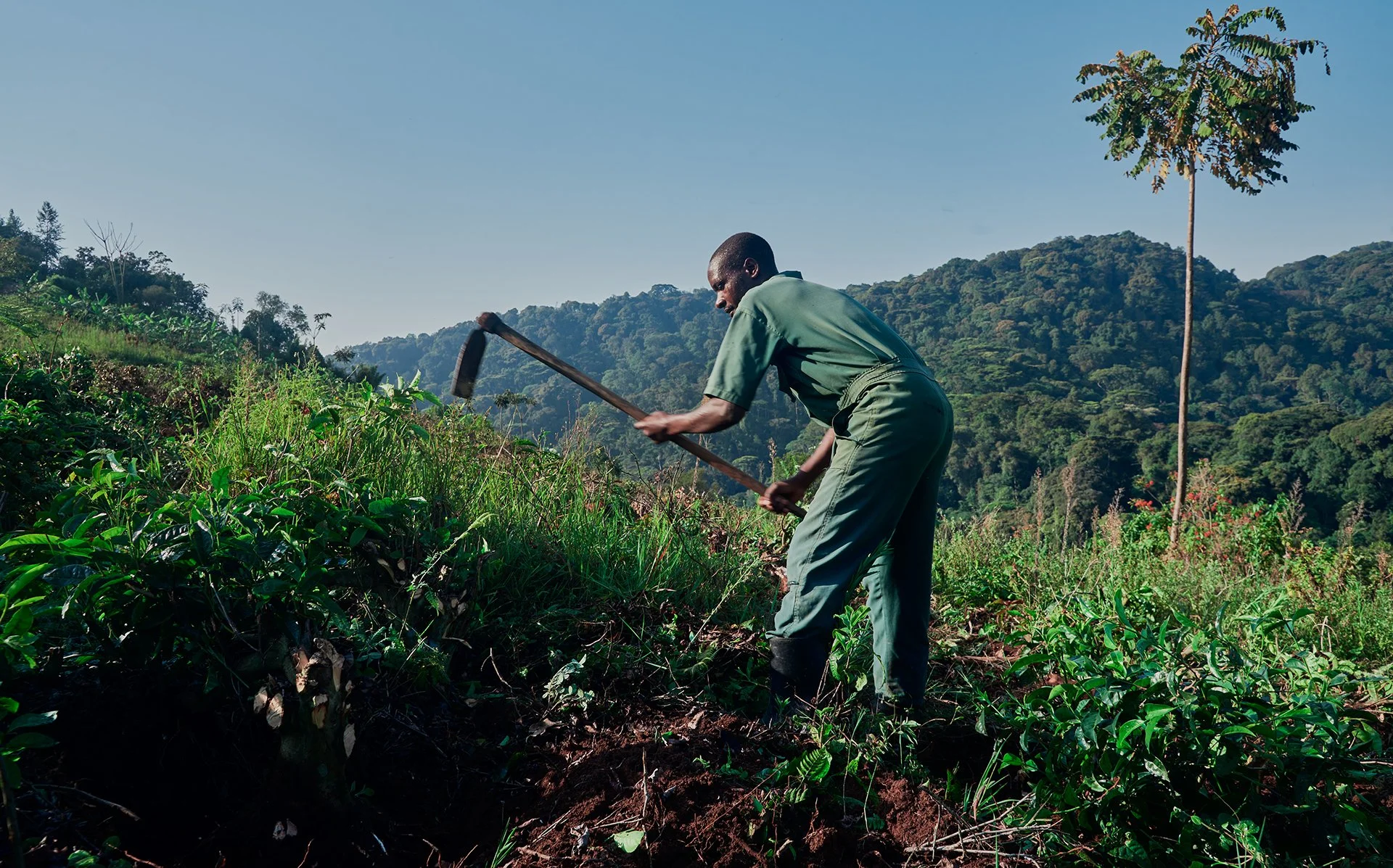
As of this year, 29,484 native seedlings representing more than 48 species have been planted across the site. Every seedling is tagged and monitored. Permanent plots track growth, survival and regeneration, while bird and butterfly surveys are also built into the plan. Early shifts are expected to be seen within three to five years, as pioneer species establish and the canopy begins to close. A structurally complex forest with layered vegetation and full ecological function will take far longer with fifteen to twenty-five years from first planting forecast as a realistic horizon.
Our long-term vision extends beyond Erebero Hills. The site forms part of the Ihamba Community Conservation Area, which currently spans just over 100 acres across several parcels, with an ambition to expand over time. If the first 100 acres demonstrate measurable ecological recovery, that learning also has value for informing reforestation approaches in similar habitats beyond our own footprint.
Restoration cannot be separated from people.
The history of Bwindi includes the displacement of Batwa communities when the park was gazetted in 1991. Any work on its edge has to sit alongside complex cultural conversation.
Through a structured Free, Prior and Informed Consent process, time is being invested in stakeholder mapping and dialogue with surrounding communities, including Batwa and Bakiga groups. The focus is on listening. What do communities want now? What role could restored forest play in livelihoods, education or heritage?
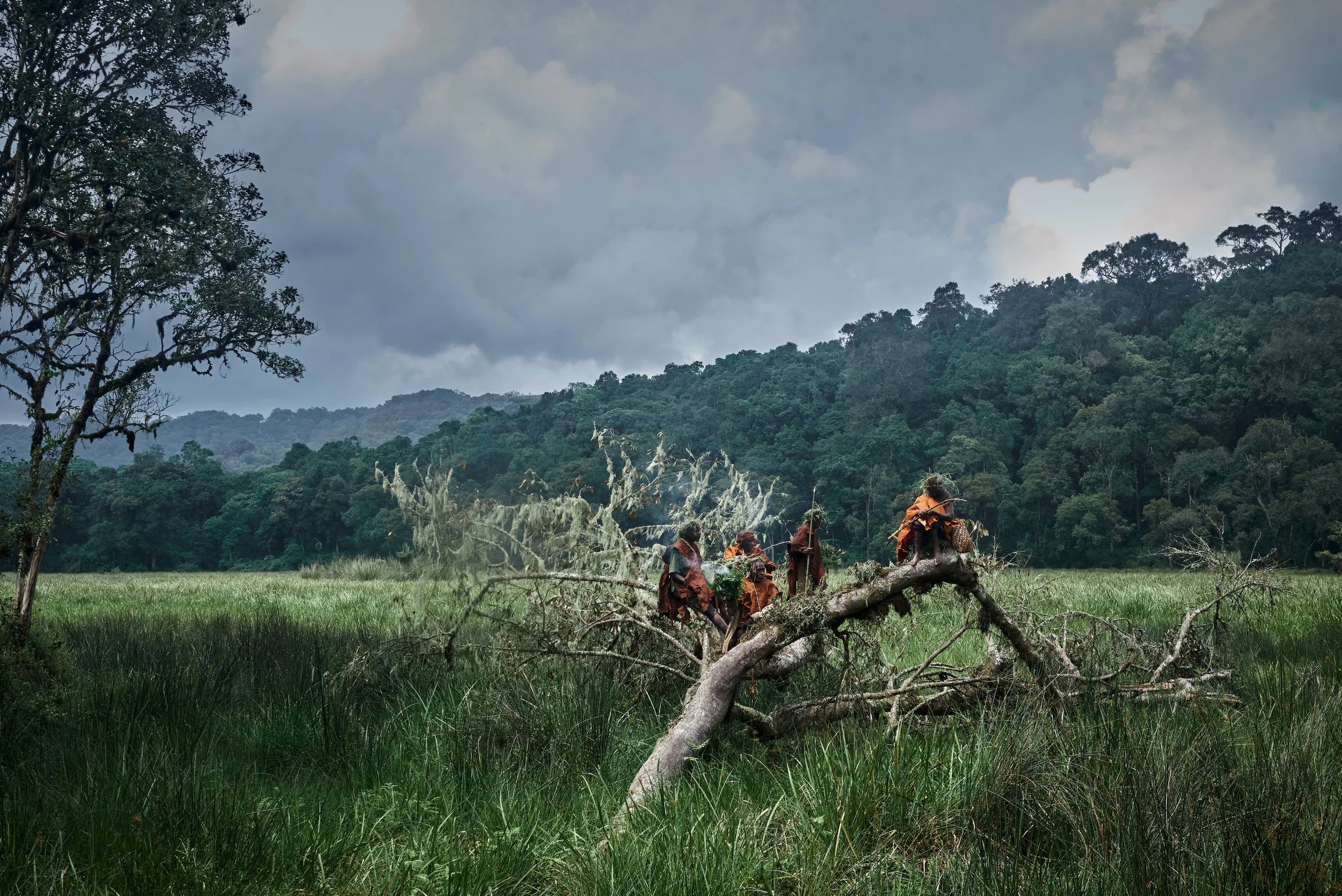
Early conversations with Batwa communities indicate interest in cultural education and access to forest space as a place of learning, where knowledge, skills and heritage can be passed between generations. The intention is not to create a sealed settlement or return communities to a past way of life, but to explore what meaningful cultural continuity looks like in a modern context.
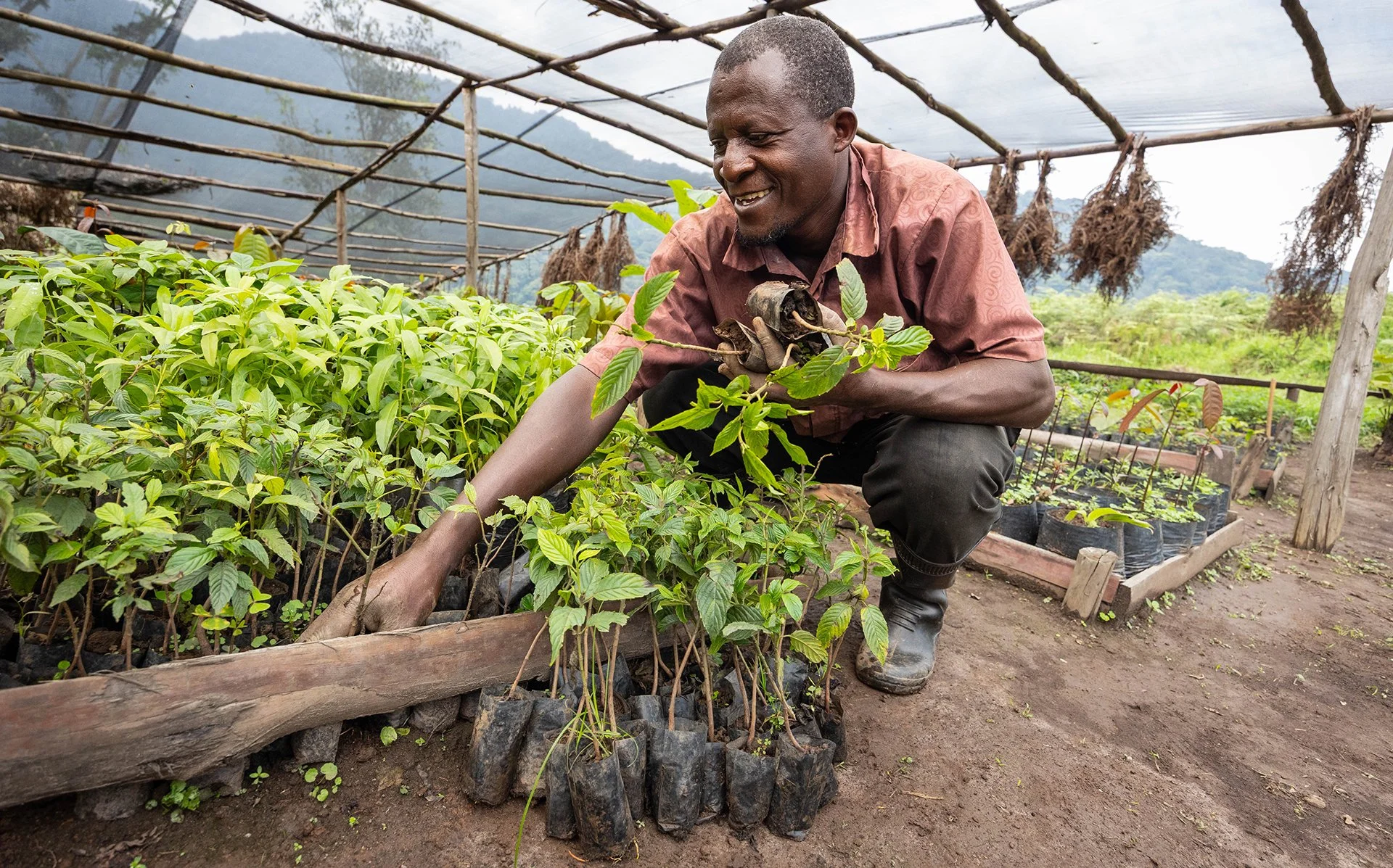
Employment is already part of the picture. Nursery work, planting, weeding and ecological monitoring are carried out by locally employed teams, including Batwa community members. This paid work also builds skills in seed collection, species identification and restoration practice. The tree nursery also creates income opportunity. Community members are paid for sourcing indigenous seedlings, and banana-fibre planting pots have been developed locally as an alternative to plastic, using abundant local materials while improving transplant success and reducing waste.
Alongside ecological restoration we are also working with Change a Life Bwindi to support their forest-friendly livelihood programmes including beekeeping, tailoring, basket weaving and mushroom farming, helping diversify income in ways that sit alongside conservation rather than competing with it.
Future ambitions
Standing at the boundary line, you can see both directions. Behind you, rows of tea cut into the hillside. Ahead, thick forest where light barely reaches the ground. The question is whether land like this, once degraded, can move back toward forest function in a way that is ecologically sound and socially just.
The area currently under restoration is small relative to the wider landscape. The work is currently focused on research, testing and evidence building. A larger model will take shape once consultation is complete and data helps us determine the best approach to support our ambitions to expand the reforestation over a wider area, recognising that forest recovery happens over decades and this stage is critical for future success.