
On 6th November 2026, Nawiri Foundation joined a regreening workshop organised by our partner, LEAD Foundation, to reflect on ten years of restoration efforts in Tanzania and agree a shared vision for the next decade.
The workshop brought together government representatives, including Mr Thomas Chali Makame, Assistant Director of Environment in the Vice President’s Office, alongside representatives from the Ministry of Natural Resources and Tourism and other stakeholders. Discussions focused on accelerating progress towards Tanzania’s commitment to bring 5.2 million hectares under restoration by 2030 and sustaining that work beyond the target date.
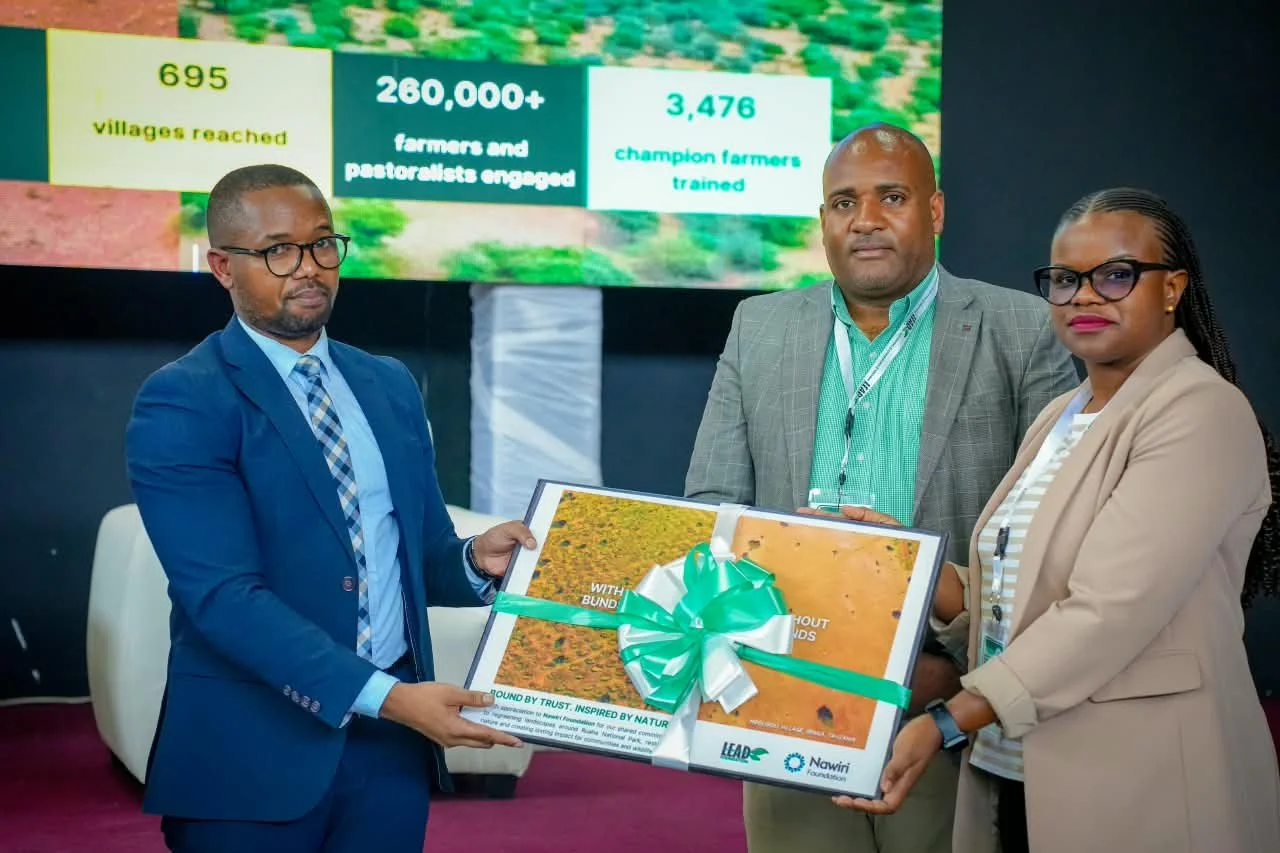
Doris Ngemera, Nawiri Foundation Public Relations and Project Coordinator, receiving an appreciation token from Mr Thomas Makame, Assistant Director of Environment in the Vice President’s Office, alongside Lead Director of Programmes Mr Njamasi Chimwaga for supporting the regreening efforts in Greater Ruaha ecosystem.
Our partnership with LEAD supports farmers and pastoralists in villages surrounding MBOMIPA Wildlife Management Area in the Greater Ruaha ecosystem to restore degraded land. The work combines farmer-managed natural regeneration, known locally as Kisiki Hai, with half-moon bunds, shallow earth structures that capture rainwater and help grass cover recover. Local farmers receive training to apply these techniques and share them with their neighbours.
In the last year, the partnership has supported restoration across 107 hectares in six villages, with 15,293 trees regenerated and over 6,000 half-moon bunds dug to improve water retention and reduce soil erosion. Training reached 805 households, of which 665 began applying restoration practices on their farms and communal land. Over 60 local Lead Champions were also trained to guide their neighbours, monitor progress, and help communities continue the work.
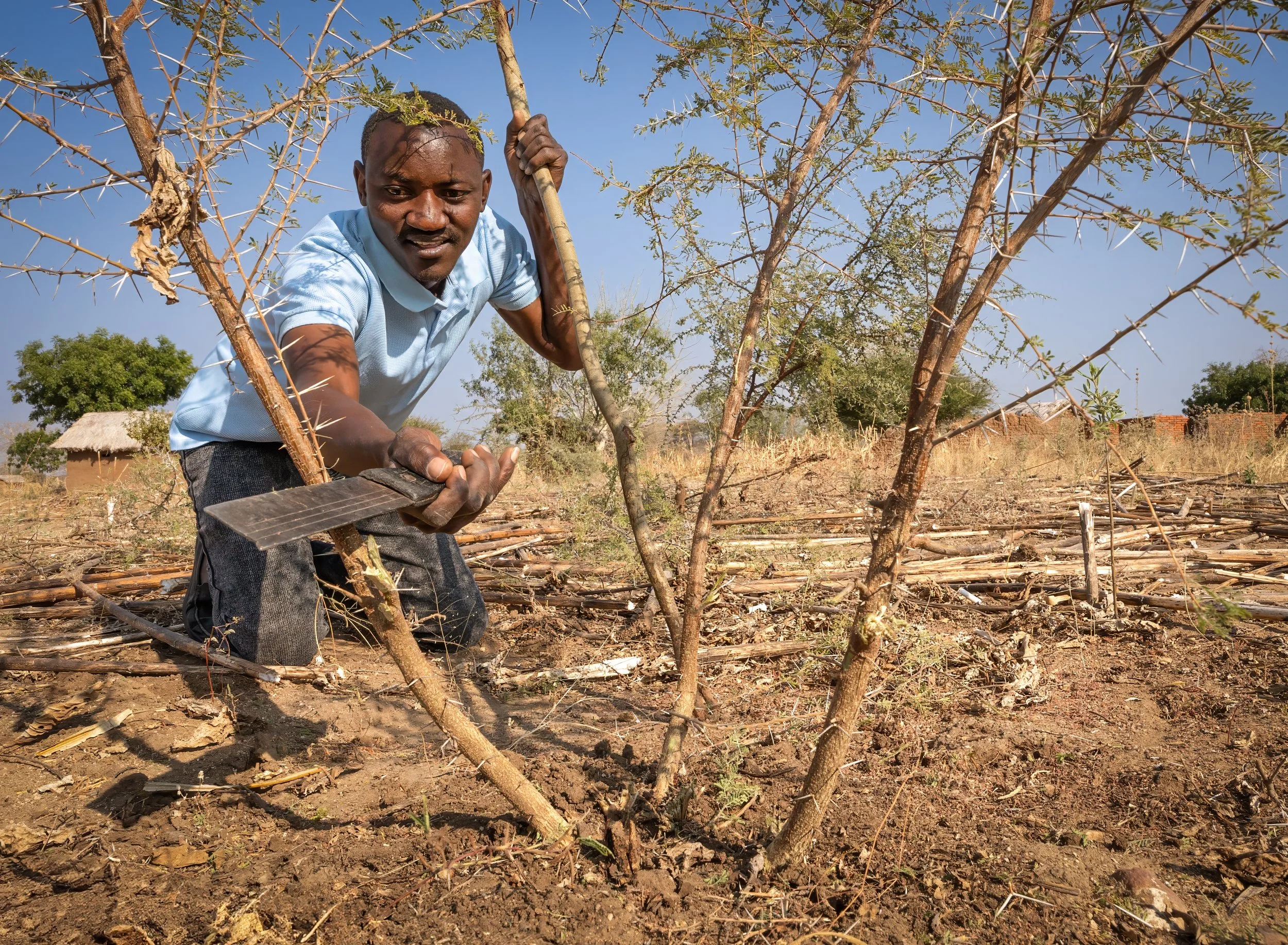
Mr Abednego Kusaduka a community member from Mafuruto village practicing the farmer-managed natural regeneration, known locally as Kisiki Hai ‘‘living stump’’ approach of restoring land through pruning trees to regrow better.
This practical experience informed our contribution to the workshop, where participants reviewed progress against LEAD’s 2016 commitments and discussed what is needed to extend proven restoration approaches to new areas. Priorities included widening participation among civil society, businesses, researchers, funders and farmer organisations, and agreeing a ten-year roadmap with 2030 as its first major milestone.
Doris Ngemera, Nawiri Foundation’s Public Relations & Project Coordinator, joined a panel discussion on the role of the private sector in restoration and sustainable landscape management. She shared insights from our partnerships and the work underway in Greater Ruaha.
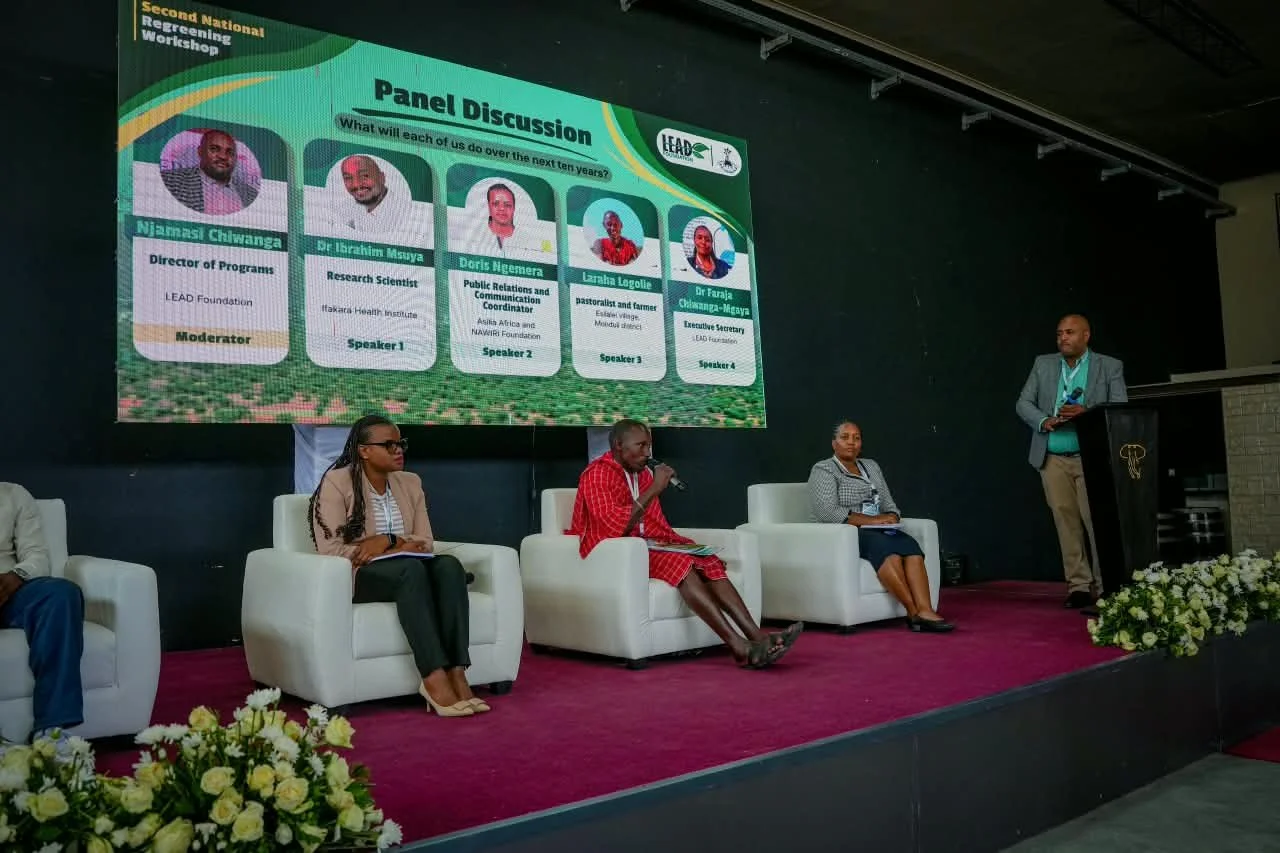
Panel Discussion at the National regreening workshop sharing insights on landscape restoration, community engagement, sustainable livelihoods, and the future of Tanzania’s regreening movement.
The workshop provided an opportunity to exchange experience and strengthen collaboration, with Nawiri Foundation acknowledged for its contribution to restoration initiatives. The shared task now is to turn that experience into sustained action, supporting communities to restore and manage the land on which their livelihoods depend.