
Supporting Coexistence with Elephants
In the dry months, vehicles travelling along the road to Doroto lift long trails of dust that hang in the air for a while and then settle again over the track. The village lies miles from a main road, close to Muhesi Game Reserve in Tanzania’s semi-arid interior. Rainfall is low and unreliable, and when surface water disappears, people dig temporary wells and draw what they can for drinking, cooking and washing. Elephants come looking for the same water.
The old routes they follow now pass through a more crowded landscape. Farms and settlements have spread into areas once used as elephant corridors. Around Kizigo and Muhesi Game Reserves, more than 120,000 people depend largely on crops and livestock. An elephant herd entering village land can cause significant damage to crops, affect household food supplies, or disrupt water points that communities rely on
Elephants remain an important part of this landscape, and communities continue to live alongside them. However, crop damage and disruption to water sources can place additional pressure on households and make coexistence more challenging.
On 24 July 2026, the Executive Officer of Doroto Village contacted the authorities with news of an elephant calf trapped in a well in the Darabetaa area, bordering Muhesi Game Reserve. The calf was about eight months old. It had come to drink at a well, slipped into the mud and could not climb back out. Its mother was somewhere nearby.
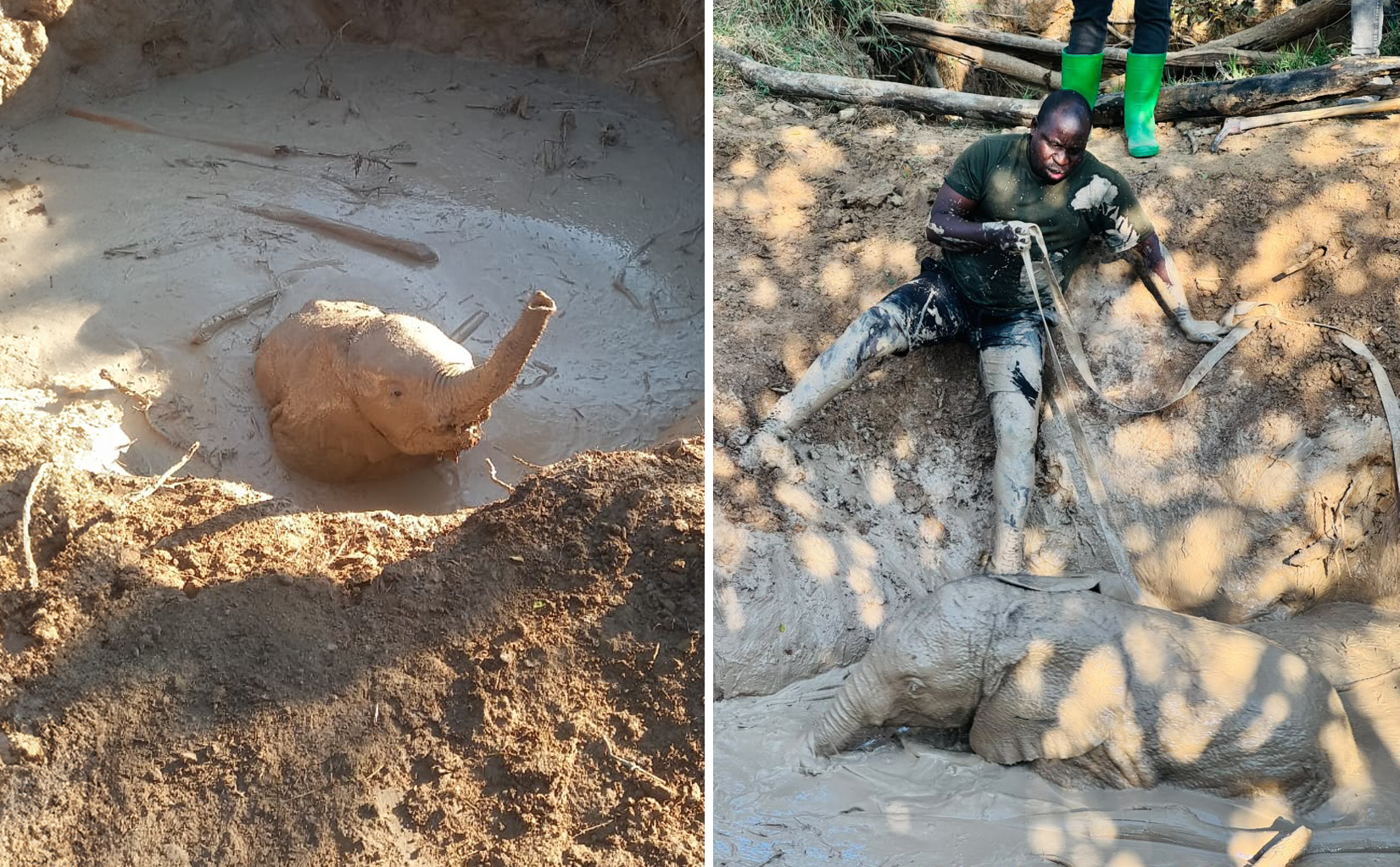
A trapped calf creates a difficult situation. The longer it remains in the well, the colder and more exhausted it becomes. Its family may stay close, unsettled by what has happened, coming into contact with people. Villagers lose access to a water source they need. Any attempt to approach the well must be carefully managed. The report reached the game reserve team early enough for them to prepare. Rangers from the Tanzania Wildlife Management Authority (TAWA) travelled to the site with a Local Elephant Monitor and specialist rescue equipment supplied by the Southern Tanzania Elephant Program (STEP) through funding from Nawiri.
At the well, the team divided into three groups. One team concentrated on the calf. A second checked the surrounding bush for adult elephants. A third began tracking the herd so that once the calf was free it could be returned quickly. They found that the mother was still close and reluctant to leave. Rangers used sound deterrents to create enough distance for the team at the well to work safely as the calf was secured with the specialist straps and carefully brought out of the mud.
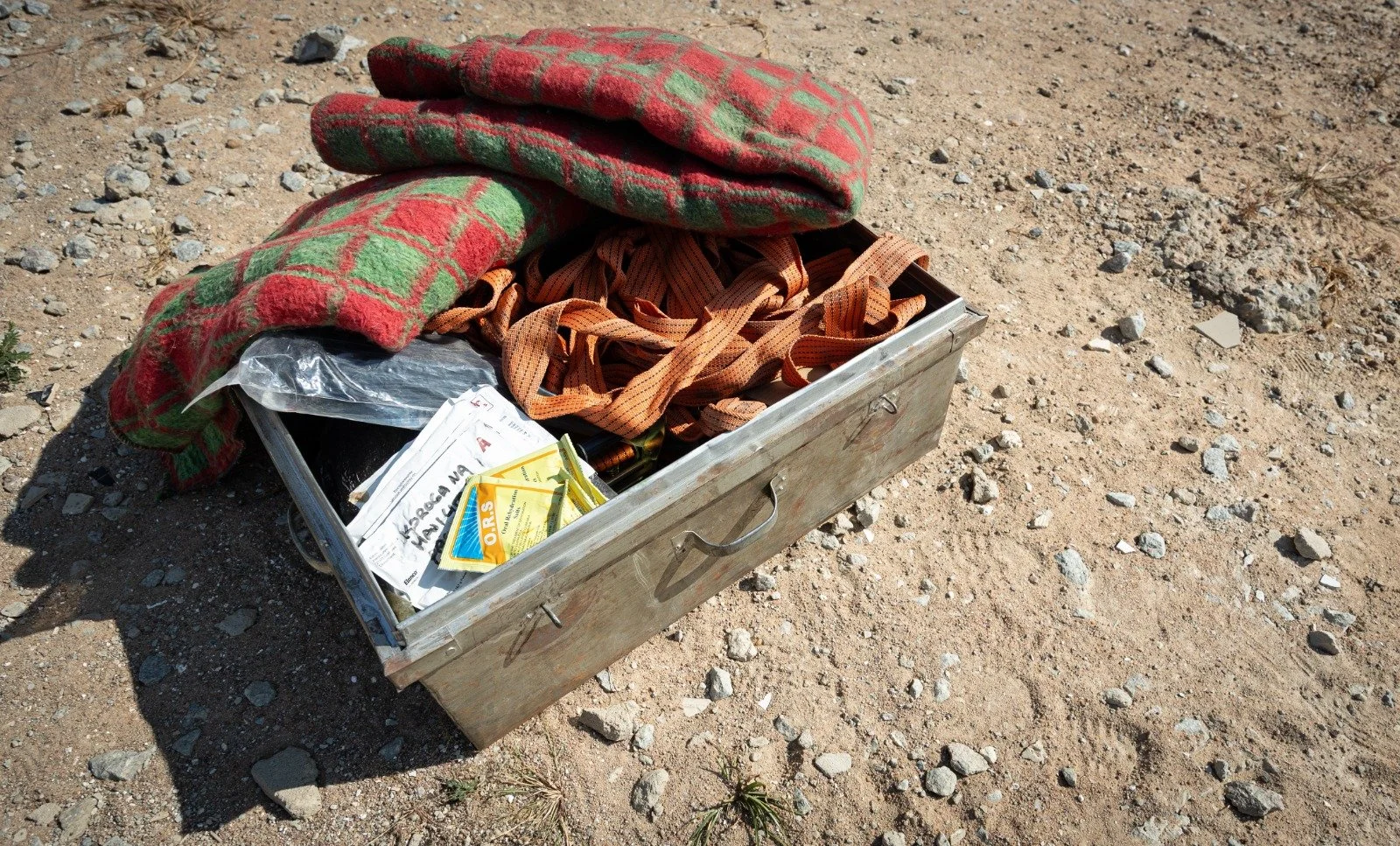
The supplied rescue kits are assembled for precisely this kind of incident. It includes belts strong enough to carry the weight of a young elephant, blankets for calves that have spent hours in cold water, and a metal rod that connects with the strapping to support a controlled lift. The response vehicle carries a mattress, feeding bottles and electrolytes, which can be mixed with warm water for a tired or dehydrated calf. Rangers are trained in how and when to use each item.
Getting the calf out was only the first part of the work. Dense vegetation made it difficult to see where the other elephants had gone. One group stayed with the calf, keeping it calm and watching its condition, while the tracking team followed footprints and other signs through the bush until they found the herd in nearby woodland. The calf was taken towards them and released, the rangers watching as it re-joined its mother and family.
For the local villagers the result was positive with the well accessible again, the elephant family were moved on, and nobody got hurt. A complicated situation was resolved quickly by people who had the right training and the equipment to act.
Living with elephants
STEP is a Tanzanian conservation organisation founded in 2014. Its work is rooted in the Ruaha-Rungwa and Udzungwa landscapes of south-central Tanzania, where it brings together elephant research, protected-area support and long-term work with neighbouring communities.
Around Kizigo and Muhesi, STEP works with village-based Local Elephant Monitors. Because they live in the communities they serve, the monitors often know where elephants are moving and where problems are likely to emerge. They visit households, share information about elephant behaviour and teach people how to reduce risk, such as distributing air horns in villages to help residents encourage elephants to move away while keeping their distance.
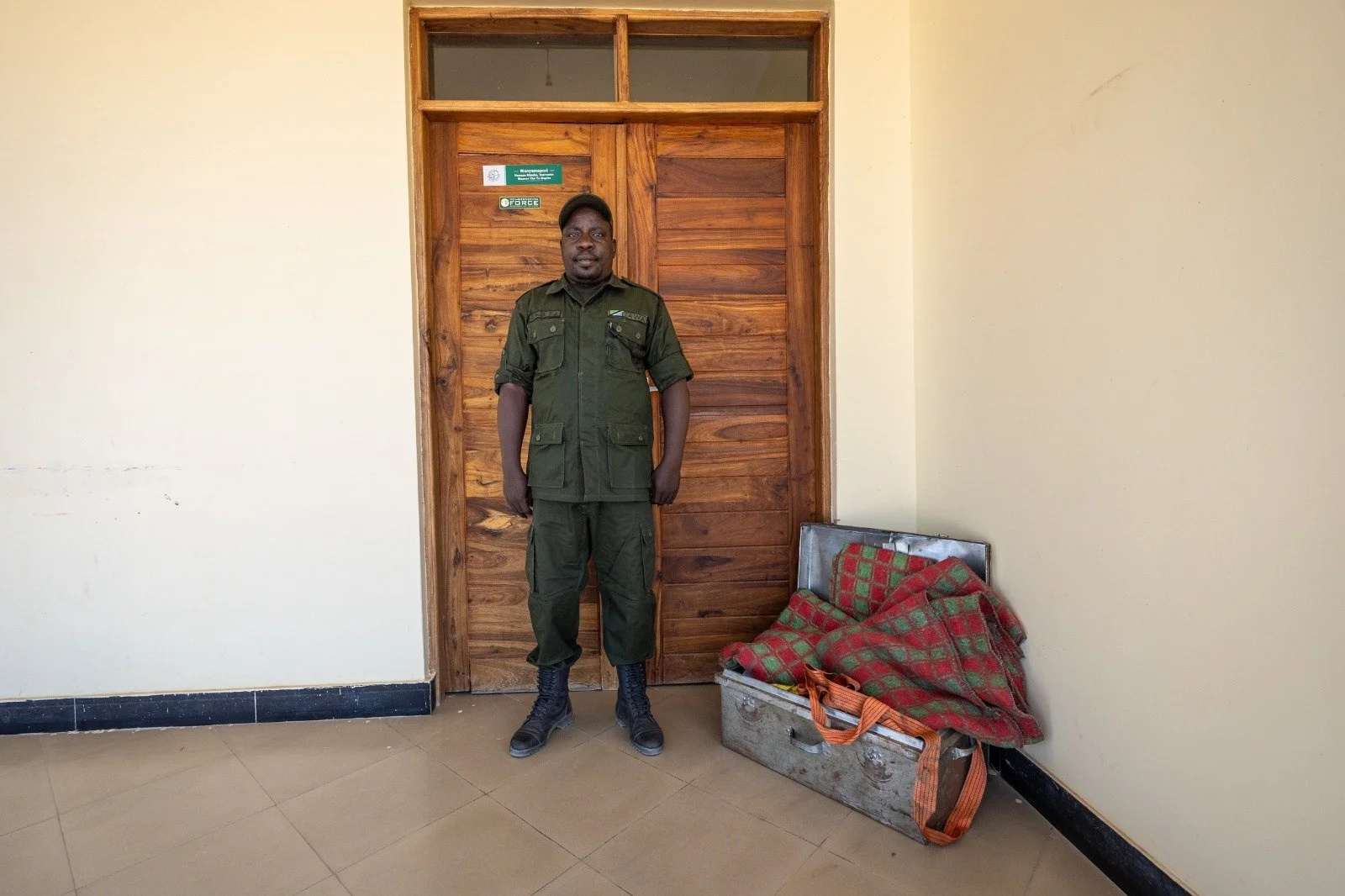
Ezekiel Genja, a Ranger employed by Tanzania Wildlife Authority (TAWA) within the Muhesi Game Reserve showing the contents from one of the supplied Elephant Rescue Kits
The rescue kits are one part of a much larger programme. With Nawiri funding, STEP is working in ten villages around Kizigo and Muhesi to make living alongside elephants more manageable. The work includes supporting ranger response by TAWA, teaching people how to stay safe, building income diversification opportunities such as beekeeping, and helping communities establish Village Savings and Loans Associations (VSLAs).
The VSLAs are particularly important in a region where families that depend entirely on one harvest have little protection when elephants damage it. Members build their own shared fund and can borrow at manageable rates to buy food, pay school costs or invest in another source of income. STEP’s research found that, among surveyed households whose crops had recently been damaged by elephants, 94% said VSLA membership had helped them manage the consequences.
The work recognises that attitudes towards wildlife are shaped by daily experience. Asking a family to value elephants means little if that family repeatedly loses food or income and receives no practical support. Coexistence depends upon reducing those costs and ensuring that assistance arrives when it is needed.
This is where the partnership fits within Nawiri Foundation’s long-term strategy whereby a central aim is that communities should earn more from nature and lose less from living alongside wildlife.
That calls for work at several levels. A family needs ways to recover after losing crops. A farmer needs practical methods to protect a field. Villagers need reliable information about elephant behaviour. Rangers need training, transport and equipment to prevent people from getting harmed when elephants are unavoidably in close contact with local communities.
Coexistence in Doroto is unlikely to become easy. The wells, fields and old elephant routes remain close to one another. On that afternoon a positive resolution could be seen in a set of mud-covered straps, an open village well and a young elephant walking back towards its family.