
Building Value from Coexistence
Through our partnership with CLAWS, communities in the eastern Okavango, Botswana, are turning better livestock management into benefits for both people and wildlife.
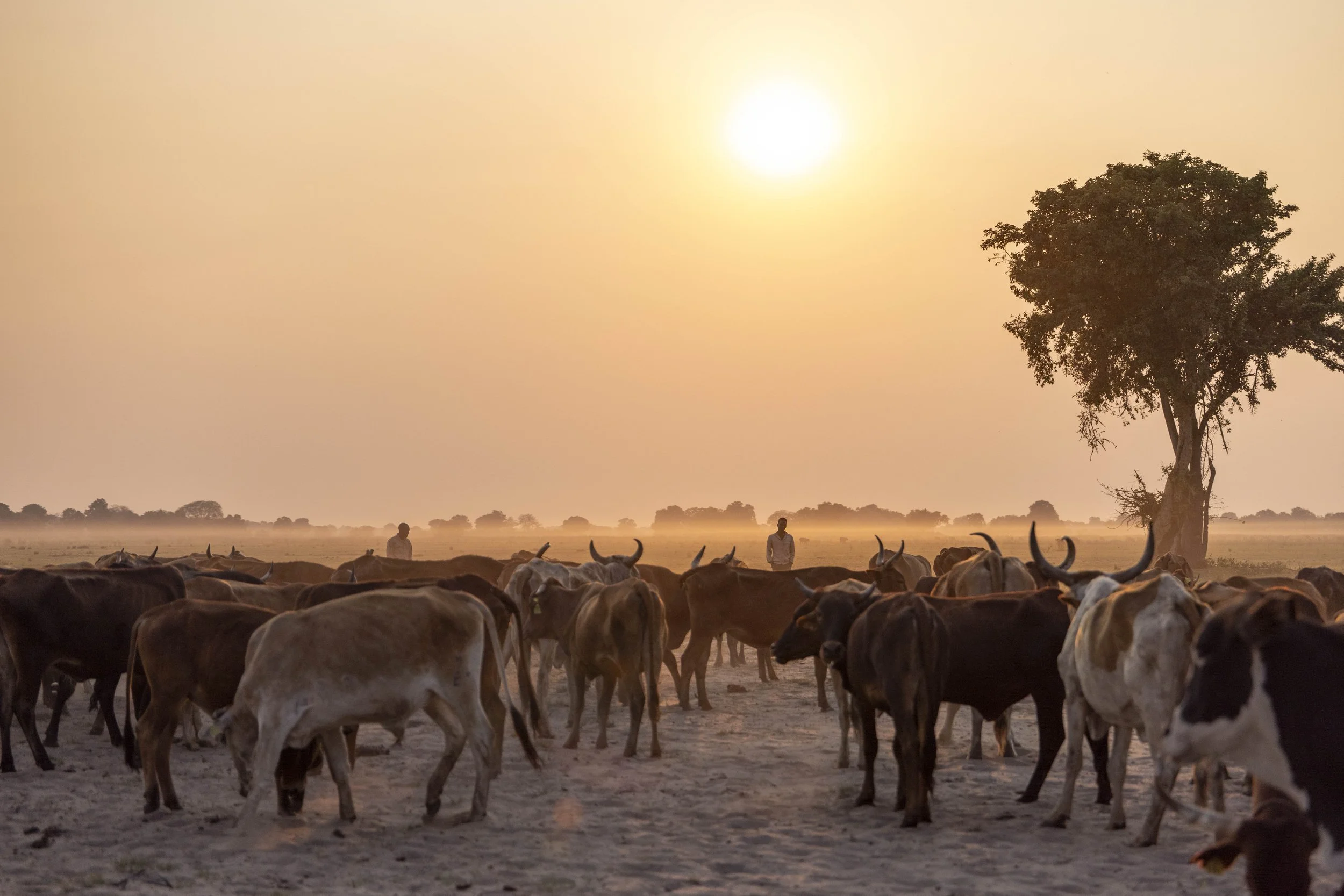
In the eastern panhandle of the Okavango Delta, the land opens slowly. Floodplains give way to mopane woodland and dry grassland that reaches up through the pale Kalahari sand. In the cool of early morning, cattle move out from their night bomas in long files, while egrets follow behind in the dust foraging the insects disturbed by the passing livestock. To the west, the Delta fans into channels and reedbeds. To the north, the country stretches toward Namibia, roadless in places, wild and thinly populated.
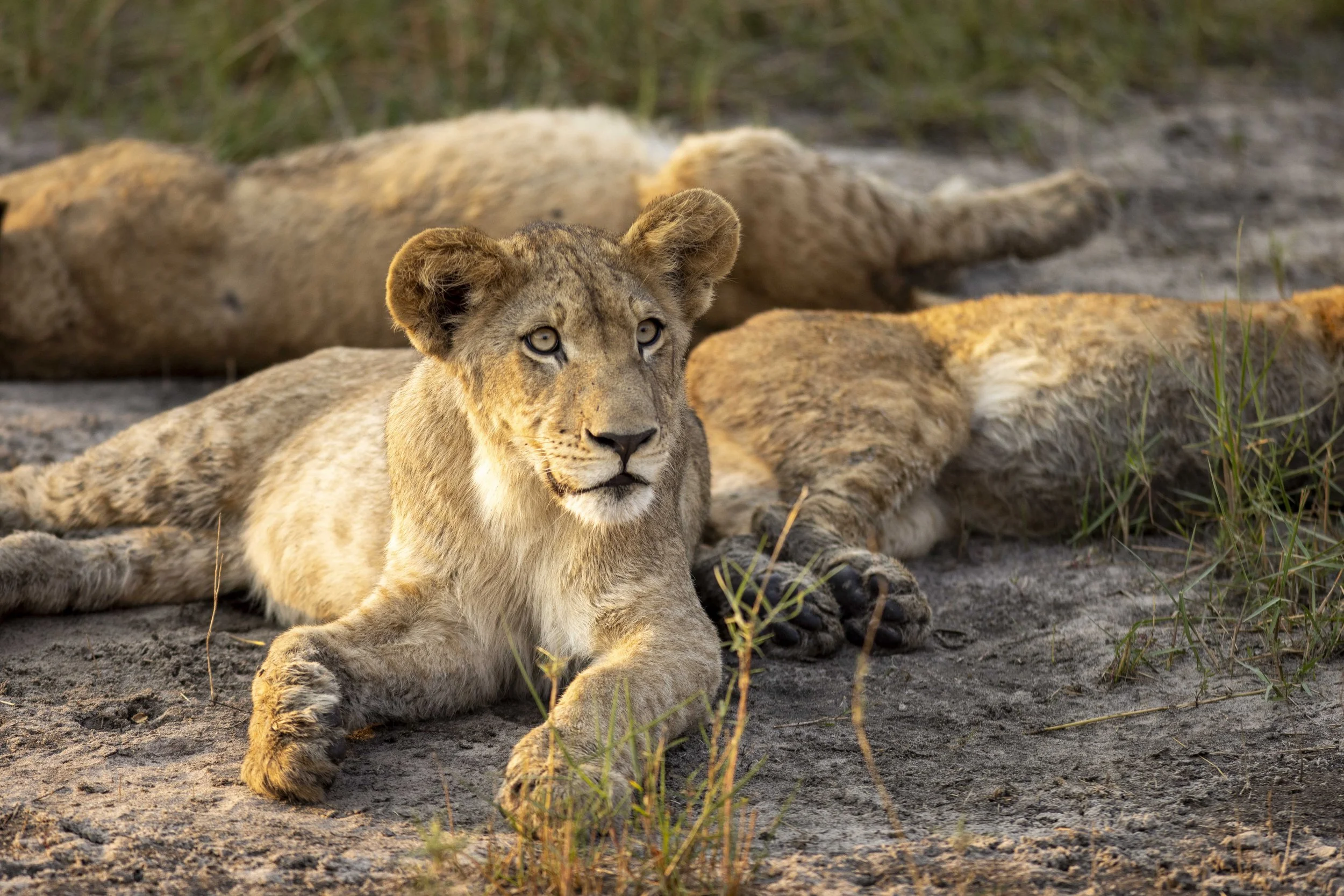
This is where CLAWS works. Their name stands for Communities Living Among Wildlife Sustainably, and the organisation was formed after a series of lion poisonings devastated the local predator population in 2013. Roughly half the lions in the area were killed that year, alongside hundreds of vultures and scavengers.
Poisoning was an act of retaliation to the lions predation, but these were opportunistic kills as a result of cattle moving freely across communal land with little supervision. Families lost livestock to predators, disease, theft, and drought. Many people no longer herded in the traditional way, and livestock often disappeared into the bush for weeks at a time. CLAWS began by monitoring lions and developing an early-warning system that sent SMS alerts to farmers when collared lions approached villages. More than 30,000 alerts have now been issued but CLAWS realised technology alone would not solve the problem and started to look at other practical solutions. They began rebuilding communal herding systems, training local young people as Ecorangers to manage cattle collectively, restore grazing lands, and reduce conflict with wildlife.
The first communal herd, launched in 2019, struggled through drought, disease, and inexperience. The programme learnt from these difficulties and gradually grew as farmers began to see first-hand the benefits of communal herding. Today, CLAWS operates across multiple villages in northern Botswana. The communal herding programme now supports around 620 cattle and 80 farmers, including 33 female farmers. Predator conflict inside the managed herds has almost stopped and lion poisonings have dropped dramatically. In villages participating in the programme, there has been no lion poisoning since 2019.
Support from NawiriGroup, through Go2Africa, has enabled CLAWS to advance an integrated conservation and livelihoods programme in northern Botswana, focused on developing wildlife-friendly economic opportunity for rural communities. We started working with CLAWS in 2024 enabling the programme to move beyond concept development into early systems-level implementation. Early results are positive, demonstrating a clear pathway.
Our funding support has been used to focus on three areas.
Livestock Protection - The first is the Beetsha community livestock protection programme. Beetsha sits in one of the Okavango’s most persistent conflict zones, where cattle theft and lion predation have long shaped daily life. Through support for a new communal boma system, the managed herd has now grown to 160 cattle owned by 22 farmers. Since the boma was established, no cattle losses have been recorded within the managed herd. The boma acts as a secure holding area at night, but it is also part of a wider grazing system designed to improve rangeland health and livestock management.
Market Access - The second area focuses on market access. For many farmers here, the nearest abattoir is almost 1,000 kilometres away. Transport costs often remove any profit entirely. CLAWS has now achieved Wildlife Friendly Beef certification through the Wildlife Friendly Enterprise Network, a global organisation that protects threatened wildlife and wild habitats by certifying businesses, farmers, and artisans whose practices promote human and nature coexistence. Earlier this year, cattle from the Beetsha herd entered the Wildlife Friendly Beef supply chain for the first time opening access to premium markets. Beef was sold to the luxury safari lodges in the region, generating BWP 87,500 in revenue distributed to farmers and community participants, creating direct financial value from conservation-compatible farming practices.
New Livelihoods - Through Go2Africa funding, CLAWS has begun testing whether hides from Wildlife Friendly Beef cattle can support a local leather industry. Twelve hides have entered a pilot tanning programme using low-impact tanning methods and locally sourced plant tannins. The project is now working with three local leather artisans, all living with disabilities, who previously had training but no access to markets or materials. The next phase will support training and small-scale production aimed at supplying both tourism and community markets.
CLAWS recognises that conservation succeeds when people receive value from keeping landscapes intact. Their approach mirrors our own, focusing on local ownership. Communities manage the grazing systems themselves, Ecorangers come from the villages, and the farmers help shape how the programme evolves.
In the eastern Okavango, cattle are still part of life and always will be. Lions are too. CLAWS is proving that the future of these landscapes does not depend on separating people from wildlife, but on building systems where both can thrive together.
Read more about CLAWS
Read more about Go2Africa’s partnership with CLAWS